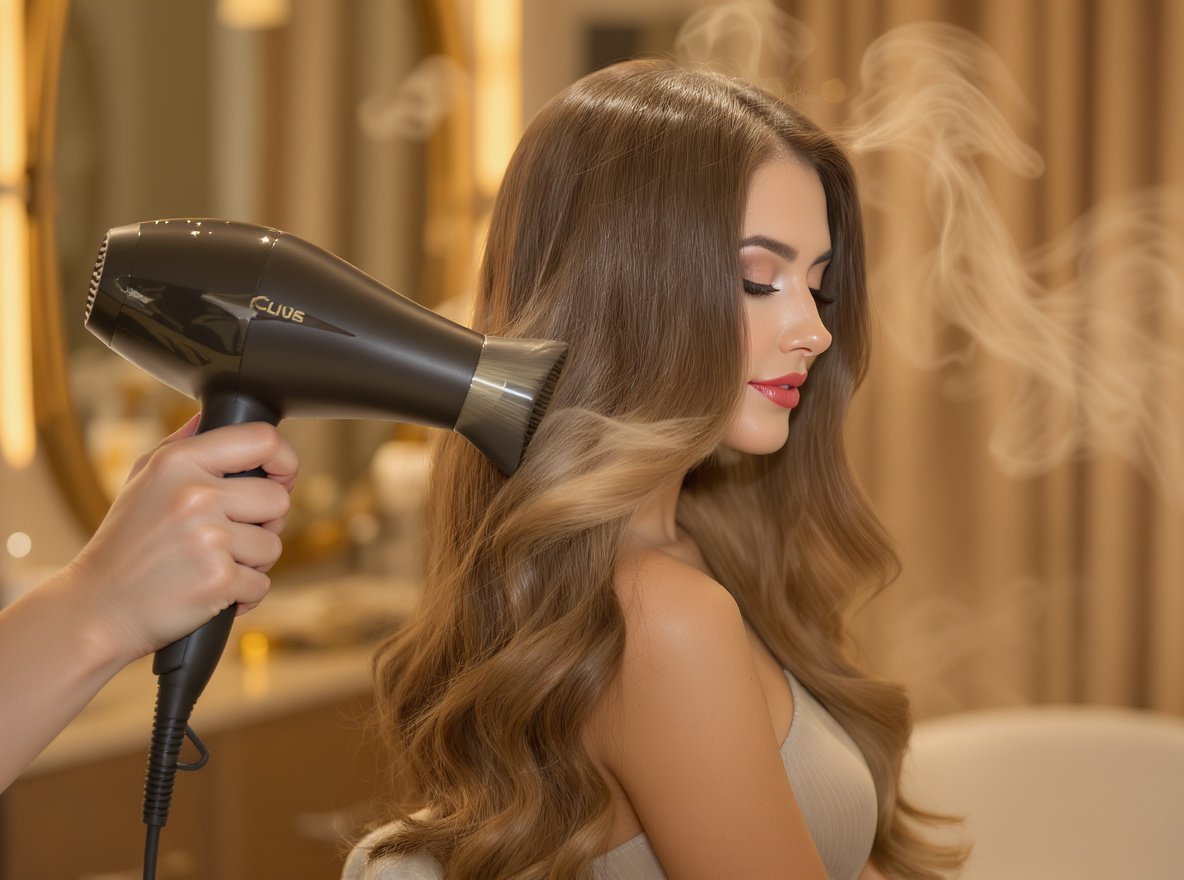
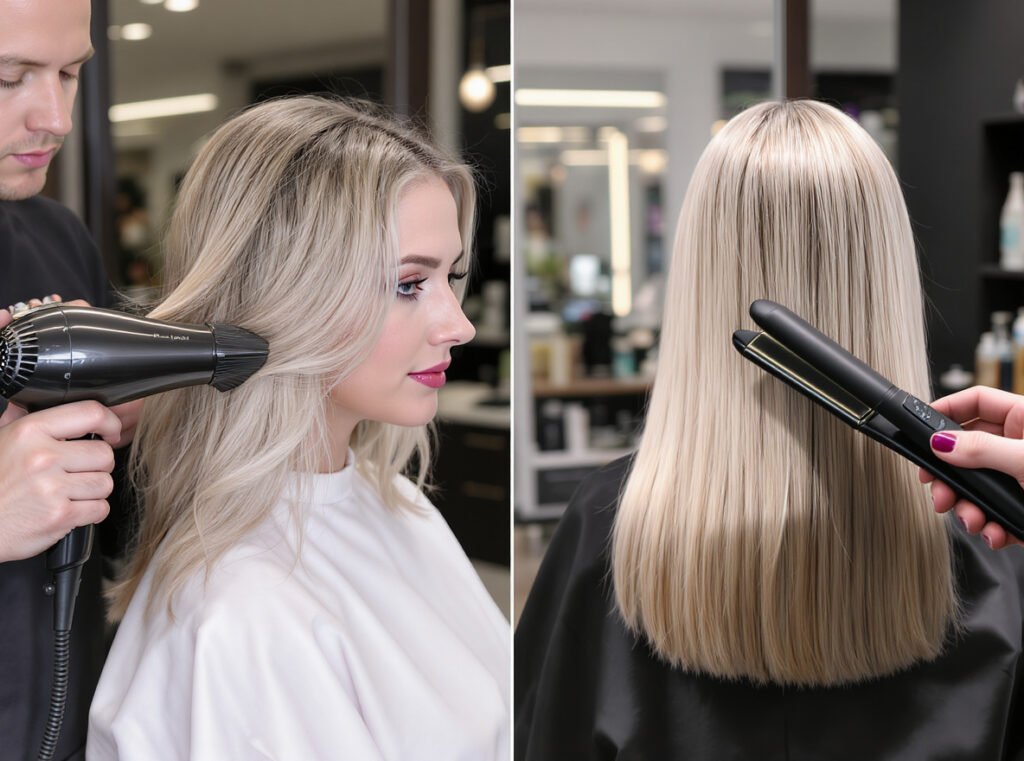
Fine hair presents unique styling challenges that require careful tool selection. With strands that are more fragile and prone to damage, choosing between a hair dryer and straightener can significantly impact your hair’s health and appearance.
For fine hair, hair dryers are typically the safer and more beneficial choice compared to hair straighteners. Hair dryers create less direct heat contact, offer better versatility for adding volume, and provide gentler heat distribution when used correctly, while straighteners apply concentrated heat directly to delicate strands.
Understanding the differences between these tools and their specific effects on fine hair will help you make the best styling decision for healthier, more voluminous results.
Why Does Hair Type Matter When Choosing Heat Styling Tools?
Fine hair has distinct structural characteristics that make tool selection absolutely critical for maintaining healthy strands.
Each fine hair strand has a diameter of approximately 0.05 millimeters, compared to 0.07 millimeters for medium hair and 0.10 millimeters for coarse hair.
Fine hair is more vulnerable to heat damage because of its thinner structure, making it more prone to breakage, less able to withstand high temperatures, and more susceptible to appearing flat without proper styling techniques.
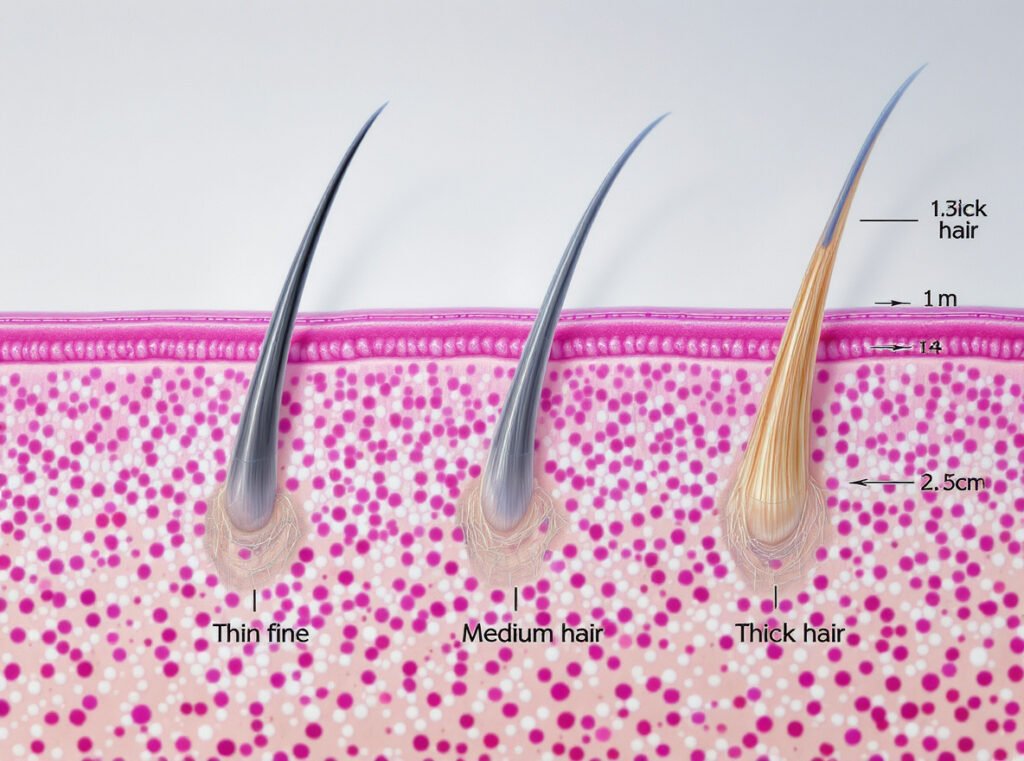
This thinner hair structure creates several challenges:
Fine hair contains fewer protein layers in each strand, providing less natural protection against heat damage. The reduced diameter means heat penetrates faster through the hair shaft, making temperature control even more crucial.
Additionally, fine hair characteristics include:
• More prone to static buildup and frizz
• Less natural oil distribution from scalp to ends
• Greater tendency to become limp with heavy products
• More visible damage when breakage occurs
| Hair Characteristic | Fine Hair (0.05mm) | Medium Hair (0.07mm) | Thick Hair (0.10mm) |
|---|---|---|---|
| Heat Sensitivity | Very High | Moderate | Lower |
| Recommended Max Temp | 250-325°F | 300-375°F | 350-450°F |
| Damage Visibility | Highly noticeable | Moderate | Less obvious |
| Volume Challenges | High | Moderate | Low |
How Do Hair Dryers Work Better for Fine Hair?
Hair dryers offer several distinct advantages that make them particularly suitable for fine hair styling needs.
Modern hair dryers use controlled airflow and distributed heat to remove moisture while providing styling flexibility without the harsh direct contact of other tools.
Hair dryers excel at adding volume to fine hair by lifting at the roots during styling, distribute heat more evenly than straighteners, and offer versatility to create multiple styles from sleek looks to voluminous curls.

Key advantages for fine hair include:
Volume creation capabilities:
- Blow-drying upside down creates lift at the roots
- Round brush techniques add body and movement
- Airflow direction can be controlled for targeted volume
- Natural texture can be enhanced rather than flattened
Superior heat distribution:
- Quality dryers with ionic technology reduce frizz and static
- Ceramic heating elements provide even temperature distribution
- Moving airflow prevents concentrated hot spots
- Distance from hair allows for gentler heat exposure
Professional techniques with hair dryers:
• Use a concentrator nozzle for precise airflow direction
• Work in sections to ensure even drying and styling
• Maintain 15cm distance for optimal heat distribution
• Finish with cool shot to set the style and close cuticles
What Makes Hair Straighteners More Challenging for Fine Hair?
Hair straighteners present unique risks and challenges when used on fine, delicate hair strands.
The mechanics of straightening involve direct heat contact and pressure that can be too intense for fine hair’s fragile structure.
Hair straighteners apply concentrated heat directly to hair strands through plate contact, creating higher risk of damage. The direct compression combined with high heat can be too intense for delicate fine hair, often resulting in a flattened appearance.

Critical concerns with straighteners include:
Direct heat and pressure risks:
- Plates clamp hair between surfaces reaching 300-450°F
- Direct compression can crush fine hair cuticles
- Multiple passes multiply damage potential
- Extended contact time with concentrated heat
Temperature challenges specific to fine hair:
- Many users unknowingly use temperatures too high for their hair type
- Fine hair requires significantly lower temperatures (250-325°F)
- Consumer straighteners often lack precise low-temperature controls
- Heat spikes can occur with lower-quality tools
Styling limitations:
- Straighteners tend to make fine hair appear even flatter
- Limited volume-building capabilities compared to dryers
- Results may look too severe or unnatural on fine hair
| Styling Aspect | Hair Dryer | Hair Straightener |
|---|---|---|
| Heat Contact | Indirect airflow | Direct plate contact |
| Temperature Range | 140-200°F optimal | 250-325°F minimum |
| Volume Potential | High | Very low |
| Damage Risk | Lower | Higher |
Which Tool Actually Creates Less Damage for Fine Hair?
Scientific research and professional experience provide clear evidence about damage levels between these styling tools.
Studies show that proper blow-drying technique can actually cause less damage than air drying, while straightener use consistently shows higher damage potential.
Hair dryers cause significantly less damage to fine hair because they don’t require direct contact, operate at lower temperatures, and allow for more natural movement. Research shows that using a hair dryer at 15cm distance with continuous motion actually causes less damage than natural air drying.

Damage comparison factors reveal important differences:
Heat intensity and distribution:
- Hair dryers typically operate at 150-200°F for fine hair
- Straighteners often reach 350-450°F with direct contact
- Professional noted: “A flat iron is hotter, and more direct heat, so therefore more damage”
- Even heat distribution in dryers prevents hot spots
Contact duration and pressure:
- Dryers have brief contact time with moving air
- Straighteners clamp hair between hot plates for extended periods
- No mechanical pressure applied with blow-drying
- Repeated straightener passes multiply damage risk
Scientific evidence supports dryer safety:
• Research demonstrates proper blow-drying causes less cuticle damage
• Temperature control is more precise with quality hair dryers
• Ionic technology in dryers actually improves hair condition
• Natural hair movement is preserved rather than forcibly altered
When Might a Hair Straightener Be Worth Considering for Fine Hair?
Despite higher risks, specific situations may warrant careful straightener use on fine hair.
Understanding when and how to use straighteners safely can help minimize damage while achieving desired results for special occasions.
A hair straightener might be worth considering for fine hair when you need precision styling for formal events, have naturally very curly fine hair that won’t straighten with just a dryer, or require ultra-sleek results that last longer than blow-drying provides.
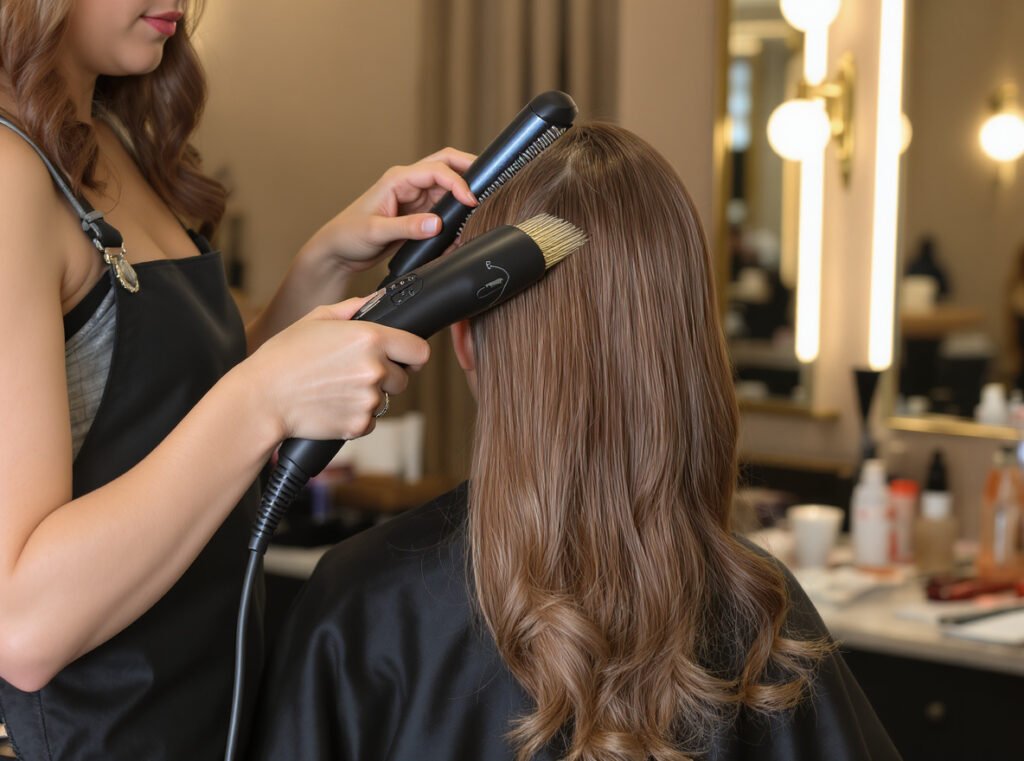
Safe straightening guidelines for fine hair:
Equipment requirements:
- High-quality straighteners with precise temperature control
- Ceramic plates for even heat distribution
- Floating plate technology to prevent snagging
- Temperature settings that go as low as 250-300°F
Proper technique essentials:
- Never exceed 325°F for fine hair
- Work with small 1-2 inch sections
- Move quickly and steadily through each section
- Avoid multiple passes over the same area
Pre-styling preparation:
- Always use silicone-based heat protectant products
- Start with hair that’s 80-90% dry, not soaking wet
- Use sulfate-free shampoo and moisturizing conditioner
| Fine Hair Straightening Protocol | Specification |
|---|---|
| Maximum safe temperature | 250-325°F |
| Section size | 1-2 inches wide |
| Heat protectant | Silicone-based, always required |
| Maximum frequency | 2-3 times per week |
| Plate material | Ceramic or tourmaline preferred |
What Should You Look for in a Hair Dryer for Fine Hair?
Selecting the right hair dryer with appropriate features can make the difference between healthy styling and heat damage.
Modern technology offers specific features designed to work safely and effectively with delicate fine hair.
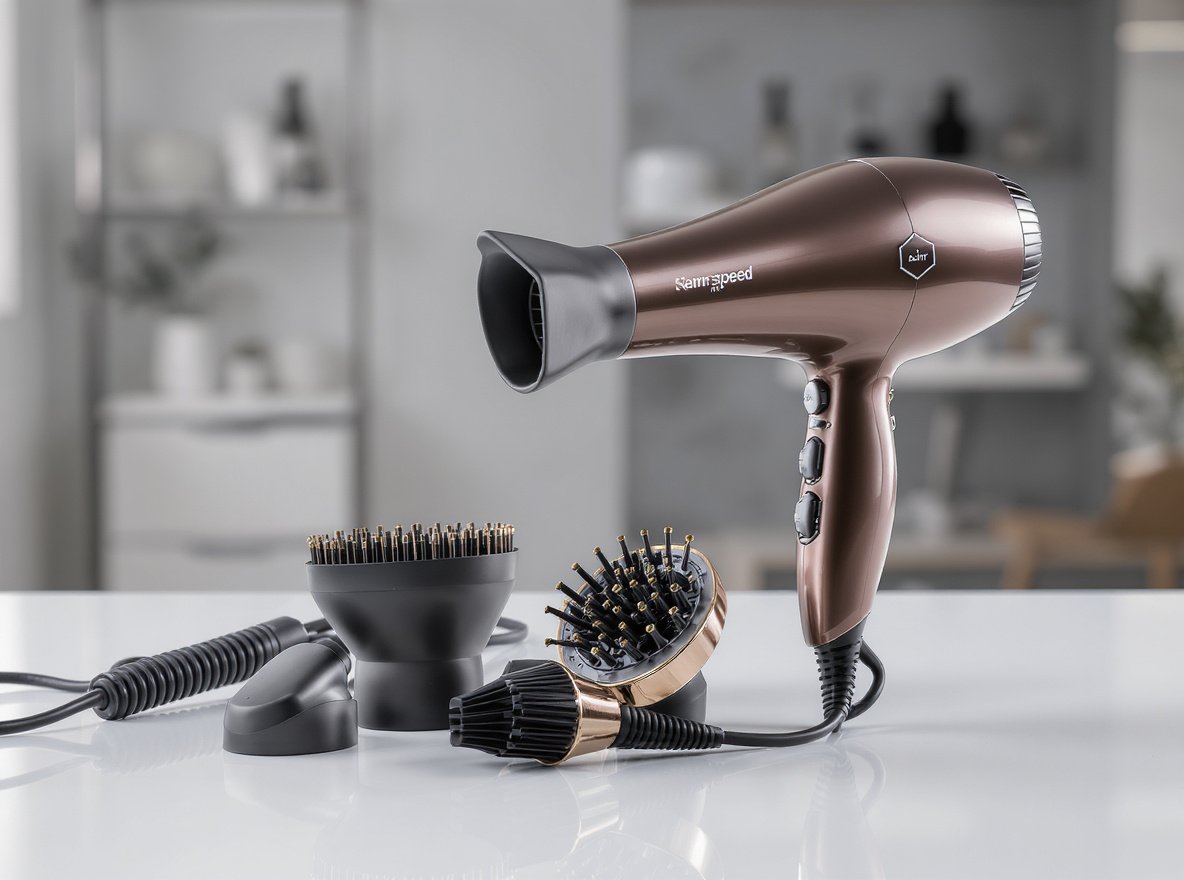
Look for a hair dryer with 1800+ watts for efficient drying, ionic technology to reduce frizz, ceramic heating elements for even heat distribution, multiple heat and speed settings, and a cool shot function for setting styles.
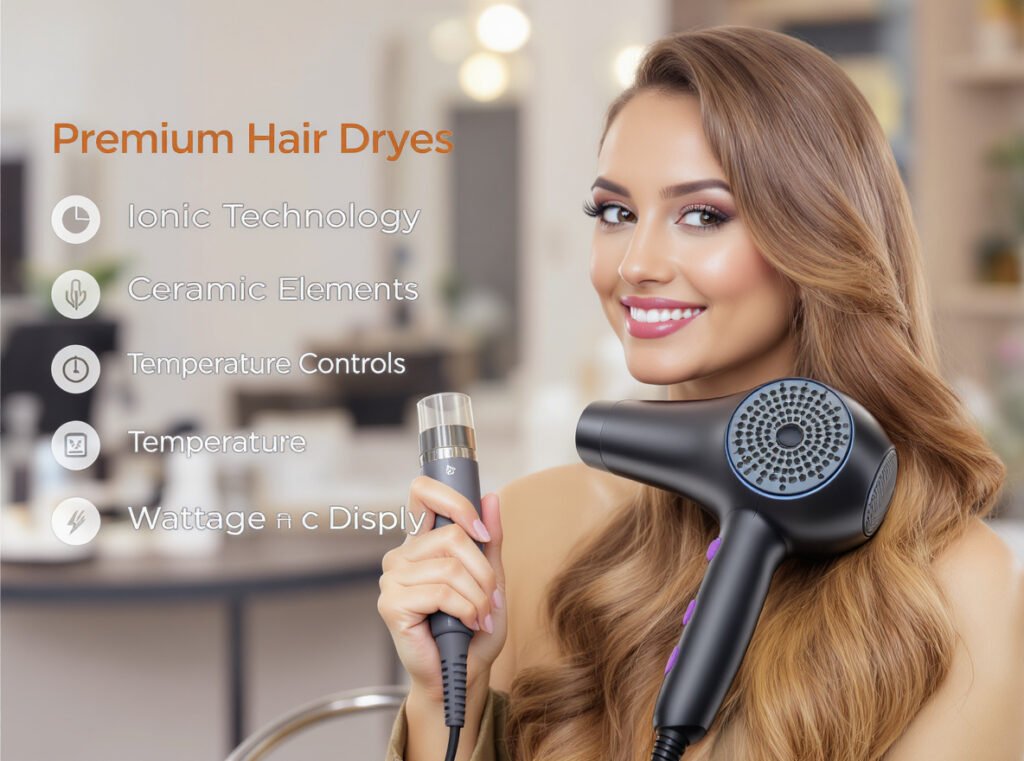
Essential features for fine hair include:
Power and efficiency specifications:
- 1800-3600 watts for faster drying with less heat exposure
- Professional models offer superior motor durability
- Higher wattage reduces overall styling time
- Efficient drying minimizes cumulative heat damage
Advanced technology components:
- Ionic technology reduces static and frizz common in fine hair
- Ceramic heating elements distribute heat evenly
- Tourmaline components add extra shine and smoothness
- Cool shot button sets styles and closes cuticles
Control and versatility features:
- Multiple heat settings with low-temperature options (140-160°F)
- Variable speed controls for gentle handling
- Concentrator nozzle for precise airflow direction
- Diffuser attachment for natural texture enhancement
For wholesale buyers seeking premium hair dryer solutions, the Laifex P1C high-speed hair dryer incorporates these essential features with professional-grade performance specifically designed for fine hair care. Explore our wholesale opportunities at https://laifex.com/p1c-hair-dryer/
Professional vs. consumer comparison:
• Professional tools: 1800-3600W, advanced materials, greater durability
• Consumer models: 800-1800W, basic heating elements, shorter lifespan
• Investment in professional-grade tools pays off in better results and longevity
• Superior temperature control in professional models prevents damage
How Can You Minimize Heat Damage Regardless of Tool Choice?
Implementing comprehensive heat protection strategies is crucial for maintaining fine hair health with any styling tool.
Professional-grade protection techniques can significantly reduce damage risk and preserve hair integrity over time.
Always use quality heat protectant products, maintain proper styling techniques with constant motion, keep temperatures as low as effective, and support hair health with regular deep conditioning treatments.

Pre-styling preparation essentials:
Product application:
- Apply silicone-based heat protectants to damp hair
- Work products evenly from mid-length to ends
- Allow slight dampness (80-90% dry) rather than soaking wet hair
- Use sulfate-free shampoo to preserve natural oils
During styling best practices:
- Work in small, manageable sections for even heat distribution
- Maintain constant motion to prevent concentrated heat exposure
- Keep tools 15cm away when using hair dryers
- Never exceed recommended temperatures for fine hair
Post-styling recovery care:
- Apply weekly deep conditioning masks to restore moisture
- Use cool shots or cool air to set styles and close cuticles
- Sleep on silk or satin pillowcases to reduce friction damage
- Get regular trims every 6-8 weeks to prevent split ends
Temperature guidelines by tool:
• Hair dryers: 140-200°F optimal for fine hair
• Straighteners: 250-325°F maximum for fine hair
• Heat protectants: Essential with every heat styling session
• Recovery treatments: Weekly deep conditioning recommended
What Are the Best Heat-Free Styling Alternatives for Fine Hair?
Heat-free styling methods can provide excellent results while completely eliminating damage risk for fine hair.
These techniques often produce longer-lasting styles and can actually improve hair health over time.
Effective heat-free alternatives include root clipping while air drying, overnight braiding for textured waves, foam rollers for volume without damage, and strategic use of volumizing products for natural texture enhancement.
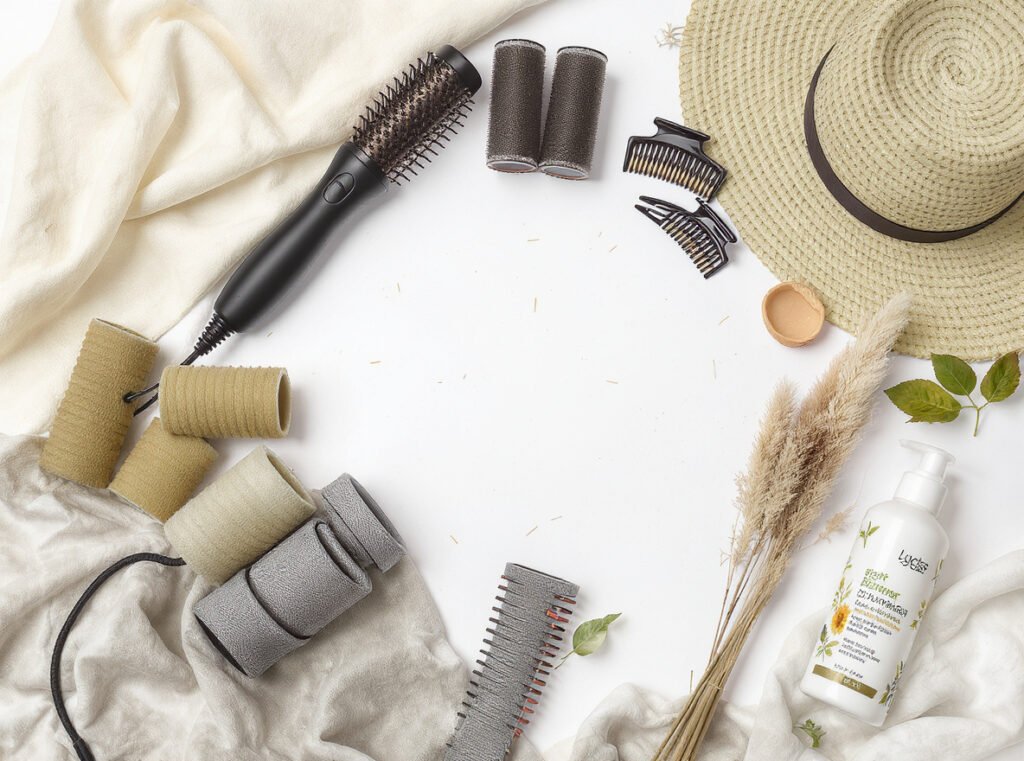
Volume-building techniques without heat:
Overnight and time-based methods:
- Root clipping during natural air drying adds lift
- Overnight braids create textured waves without heat damage
- Foam rollers provide curls while hair dries naturally
- Velcro rollers create smooth volume at the roots
Product-based styling solutions:
- Root-lifting sprays applied to damp hair before styling
- Volumizing mousse for lightweight texture without stiffness
- Texture sprays for grip and body in fine hair
- Dry shampoo for refreshing styles between washes
Professional techniques:
- Plopping method with microfiber towels for curl definition
- Scrunching with sea salt spray for beachy texture
- Strategic sectioning and clips during air drying
- Leave-in conditioners for smooth, heat-free results
| Heat-Free Method | Time Required | Damage Risk | Volume Potential | Best Results For |
|---|---|---|---|---|
| Root clipping | 2-3 hours | None | High | Natural lift |
| Overnight braids | 8 hours | None | Medium | Textured waves |
| Foam rollers | 1-2 hours | None | Very high | Defined curls |
| Product styling | 30 minutes | None | Medium | Enhanced texture |
Should You Invest in Professional vs. Consumer-Grade Tools?
The quality difference between professional and consumer hair tools directly impacts results and hair health over time.
For fine hair especially, the superior temperature control and construction of professional tools can prevent significant damage.
Professional-grade tools are worth the investment for fine hair because they offer more precise temperature control, better heat distribution, advanced materials like ceramic and tourmaline, and greater durability designed for frequent use.

Professional tool advantages:
Performance specifications:
- Higher wattage (1800-3600W) for faster, more efficient styling
- Superior motor construction designed for longevity
- Advanced heating elements for consistent temperature control
- Better insulation prevents external heat transfer
Technology and materials:
- Ceramic and tourmaline components for even heat distribution
- True ionic technology (not just marketing claims)
- Precise temperature calibration prevents dangerous heat spikes
- Professional-grade switches and controls
Long-term value considerations:
- Better results require fewer passes and less heat exposure
- Longer warranties and service support available
- Reduced risk of accidental overheating and damage
- Professional tools often last 3-5x longer than consumer models
Cost-benefit analysis for fine hair:
• Mid-range professional tools ($129-$209) offer significant improvements
• Premium models ($400+) include advanced temperature control crucial for fine hair
• Initial investment offset by reduced damage and longer tool life
• Professional results reduce need for frequent salon visits
For wholesale partners looking to offer customers premium hair care solutions, investing in professional-grade inventory ensures customer satisfaction and reduces returns. Contact Laifex to explore wholesale pricing on professional hair dryer lines designed specifically for fine hair care needs.
Summary
Hair dryers are generally the better choice for fine hair due to their gentler heat distribution, volume-building capabilities, and reduced damage potential compared to straighteners. While straighteners can be used occasionally with proper precautions and professional-grade equipment, regular use of a quality hair dryer with appropriate heat protection techniques will better preserve fine hair health and appearance over time.
Whether you choose professional or consumer-grade tools, prioritize features like precise temperature control, ionic technology, and ceramic heating elements. For wholesale buyers interested in offering premium hair styling solutions to customers with fine hair, explore our professional product lines and partnership opportunities.