You’re shopping for a new hair dryer and notice that some models feel surprisingly heavy while others are lightweight. Does this weight difference mean you’re getting more power? The relationship between hair dryer weight and performance has evolved significantly with modern technology.
Traditionally, yes, but not always. Heavy-duty hair dryers typically deliver higher wattage and more powerful airflow, with professional-grade models weighing 1.2 to 1.9 pounds. However, modern innovations have challenged this correlation through advanced motor technology and engineering design that optimize power-to-weight ratios.
Let’s explore the real factors that influence hair dryer performance and help you make the best choice for your wholesale customers’ needs.
What Makes a Hair Dryer Heavy?
Understanding the components inside hair dryers helps explain why some models weigh significantly more than others.
Hair dryer weight primarily comes from motor type, internal components, construction materials, and cord specifications. AC motors, robust electrical circuitry, reinforced housing materials, and professional-grade cords are the main contributors to overall weight.
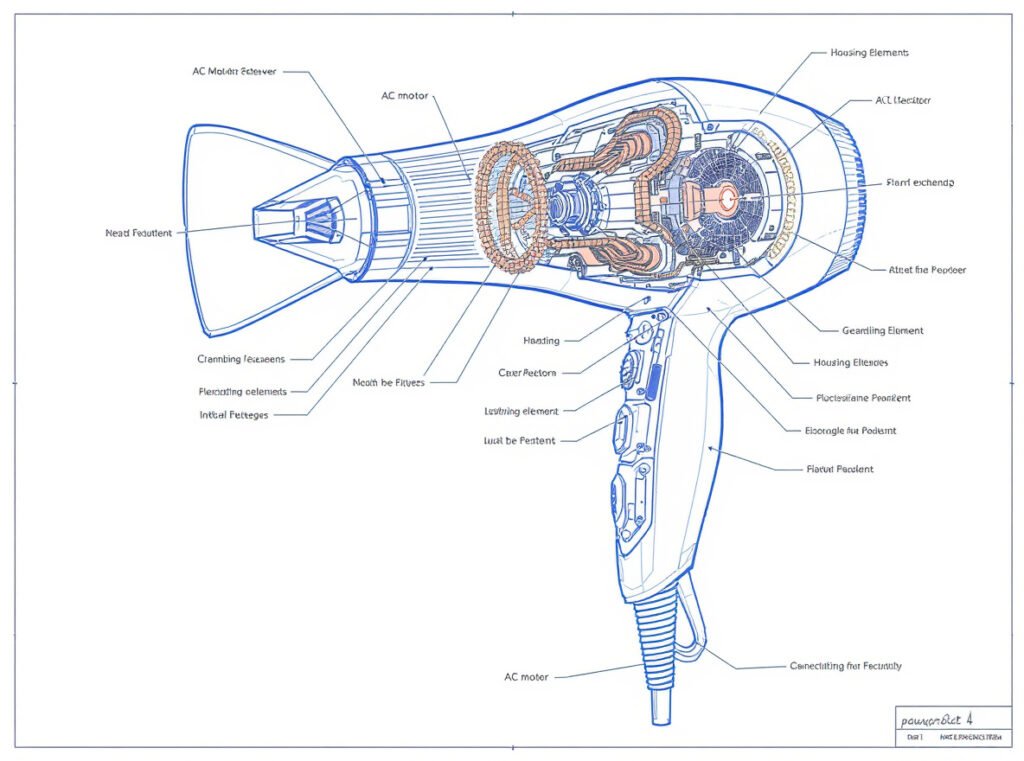
The motor serves as the primary weight determinant in most hair dryers. AC motors are significantly heavier than DC motors due to their larger size and more powerful construction, typically adding 3+ ounces compared to DC alternatives. Professional models require substantial internal components to handle increased power loads, including larger heating elements and enhanced cooling systems.
Construction materials play a crucial role in weight distribution. Professional-grade dryers use durable materials like reinforced plastics and metal components that add weight but improve longevity. The housing materials, primarily polycarbonate (PC) and ABS+PC blends, vary in thickness and density based on the intended use.
Professional dryers also include heavy-duty cords that can add approximately 200 grams to overall weight. Salon-grade models typically feature 2.5-meter cords designed for durability and extended reach.
| Component | Weight Impact | Performance Benefit |
|---|---|---|
| AC Motor | High (+3+ oz vs DC) | Consistent powerful airflow, 1,000-2,000+ hour lifespan |
| Professional Cord | Moderate (+200g) | Enhanced durability, salon-length reach |
| Reinforced Housing | Moderate | Heat resistance, improved longevity |
| Enhanced Circuitry | Low-Moderate | Multiple settings, precise control |
| Ion Generators | Low | Frizz reduction, improved smoothness |
Does Higher Wattage Always Mean More Weight?
Modern technological advances have significantly decoupled wattage from weight in many hair dryer models.
Not necessarily. While higher wattage generally indicates more power consumption and heat generation, innovative motor technologies and materials engineering have enabled powerful performance in lighter packages, with some models achieving professional-grade results at under 300 grams.
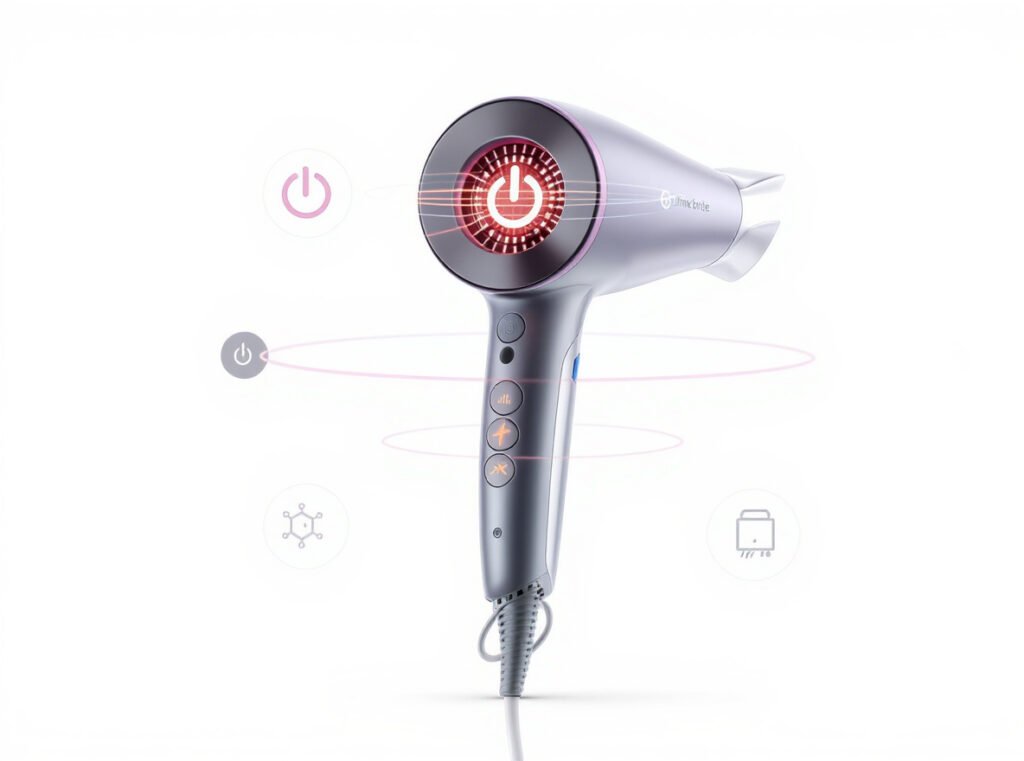
The Elchim Anemos V2 exemplifies this evolution, weighing only 290 grams (10.2 oz) while delivering professional-grade performance with its 110,000 RPM brushless motor. Similarly, the T3 Fit demonstrates modern engineering capabilities, being 30% smaller and 20% lighter than full-size dryers while maintaining 1600 watts of power.
Advanced brushless DC motors have revolutionized the power-to-weight equation:
- GAMMA+ Hybrid: 10.6 oz with 100,000 RPM brushless motor
- Turbo Power Twin Turbo 3200: 17.3 ounces delivering 1,700 watts and 46.50 CFM airflow
- Professional performance achieved through motor efficiency rather than size
The key lies in optimizing motor efficiency and utilizing advanced materials that can handle high power loads without requiring bulky construction. This trend benefits both professional stylists seeking comfort and consumers valuing convenience.
What’s the Difference Between AC and DC Motors in Hair Dryers?
Motor type fundamentally determines both weight characteristics and performance capabilities of hair dryers.
AC motors are significantly heavier but provide consistent, powerful airflow with longer lifespans of 1,000-2,000+ hours, while DC motors are lighter and achieve faster RPMs (5,000-6,000 vs 1,500-2,000 for AC) but typically last 400-700 hours.
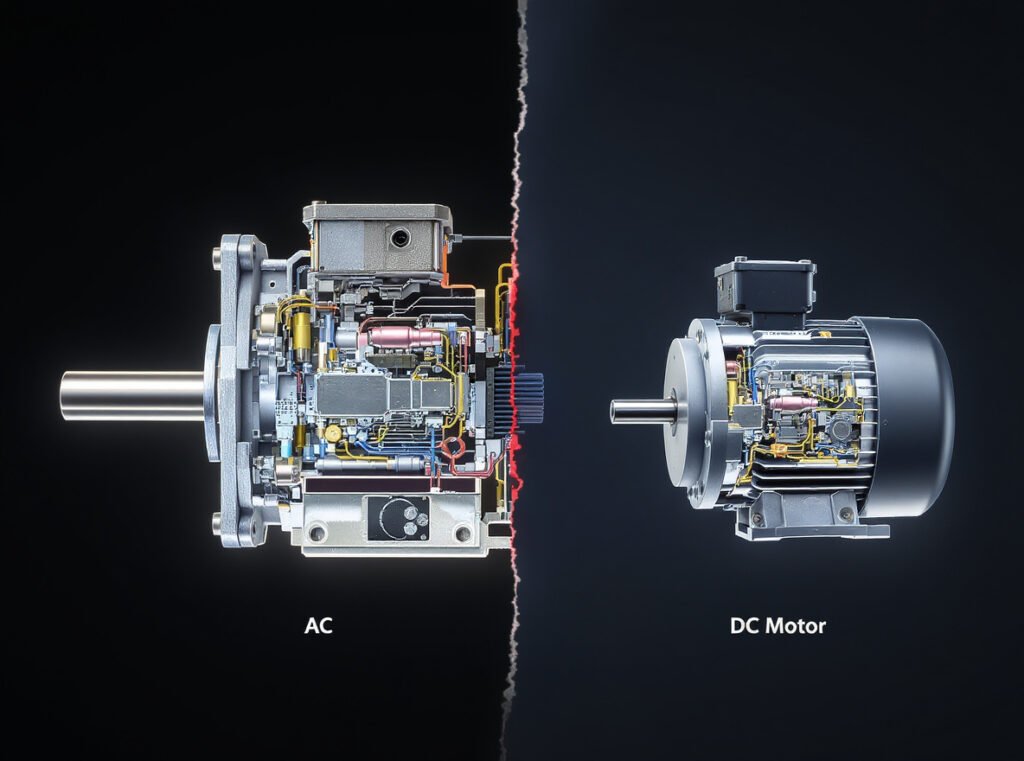
AC motors excel in professional environments where consistent performance and durability matter most. They maintain steady airflow even during extended use and handle the demands of frequent daily operation. However, they consume more energy and generate more heat, requiring robust housing and cooling systems that add considerable weight.
DC motors offer several distinct advantages for modern hair dryer design:
- Significantly lighter and more compact construction
- Higher RPM capabilities enabling faster drying
- More energy-efficient operation
- Quieter performance in many applications
- Better suited for travel and extended hand-held use
The trade-off traditionally came in longevity and sustained power output. However, brushless DC motor technology has largely addressed these concerns, offering improved durability while maintaining the weight advantages.
For wholesale buyers, understanding this distinction helps match products to target markets – professional salons may prefer AC motor reliability, while consumer markets often value DC motor portability and efficiency.
Are Lightweight Hair Dryers Less Effective?
Modern lightweight hair dryers can deliver professional-quality results that rival traditional heavy-duty models.
Modern lightweight dryers aren’t necessarily less effective. Advanced brushless motor technology and engineering design allow lightweight models to achieve excellent results, with some professional reviews confirming powerful performance in models under 1 pound.
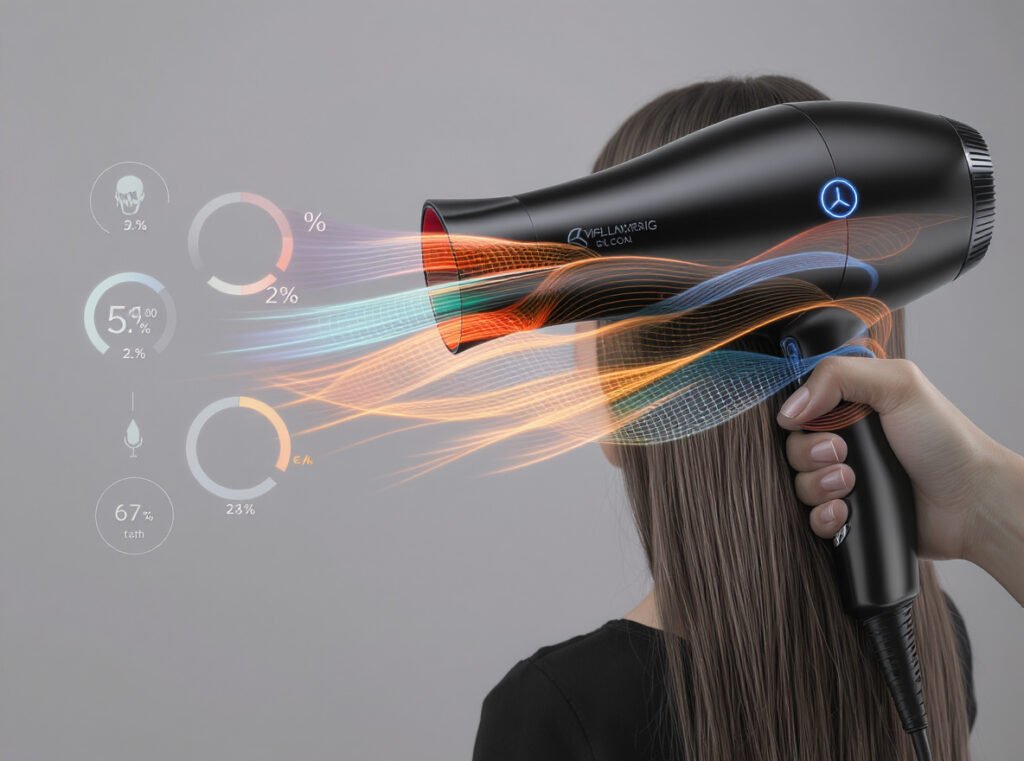
The revolution in lightweight effectiveness comes from several technological advances. Brushless DC motors have transformed the lightweight dryer segment, offering high RPMs and efficient airflow in compact packages. These motors enable precise control and consistent performance without the bulk of traditional designs.
Professional validation supports lightweight effectiveness. Reviews of ultra-light models consistently report impressive results: “Very impressed with this dryer! It’s very lightweight & very powerful!” demonstrates that weight reduction doesn’t necessarily compromise performance.
However, considerations remain for specific use cases:
| Use Case | Lightweight Advantage | Potential Limitation |
|---|---|---|
| Professional Salon | Reduced fatigue, comfortable all-day use | May require longer drying times for very thick hair |
| Home Consumer | Easy handling, storage convenience | Less durability under heavy use |
| Travel Use | Portability, luggage space saving | Limited power in some ultra-light models |
| Thick/Coarse Hair | Better maneuverability | May need multiple passes, longer sessions |
The key insight for wholesalers is that extremely lightweight models may require longer drying times, which can potentially cause more heat damage than using a more powerful dryer for shorter periods. Balance remains crucial.
What’s the Optimal Hair Dryer Weight Range?
Professional recommendations and user comfort studies suggest specific weight ranges for optimal performance and usability.
Professional recommendations suggest 1-1.5 pounds as optimal for most users. This range provides sufficient power for effective drying while maintaining manageable weight for extended use and reducing arm fatigue during styling sessions.
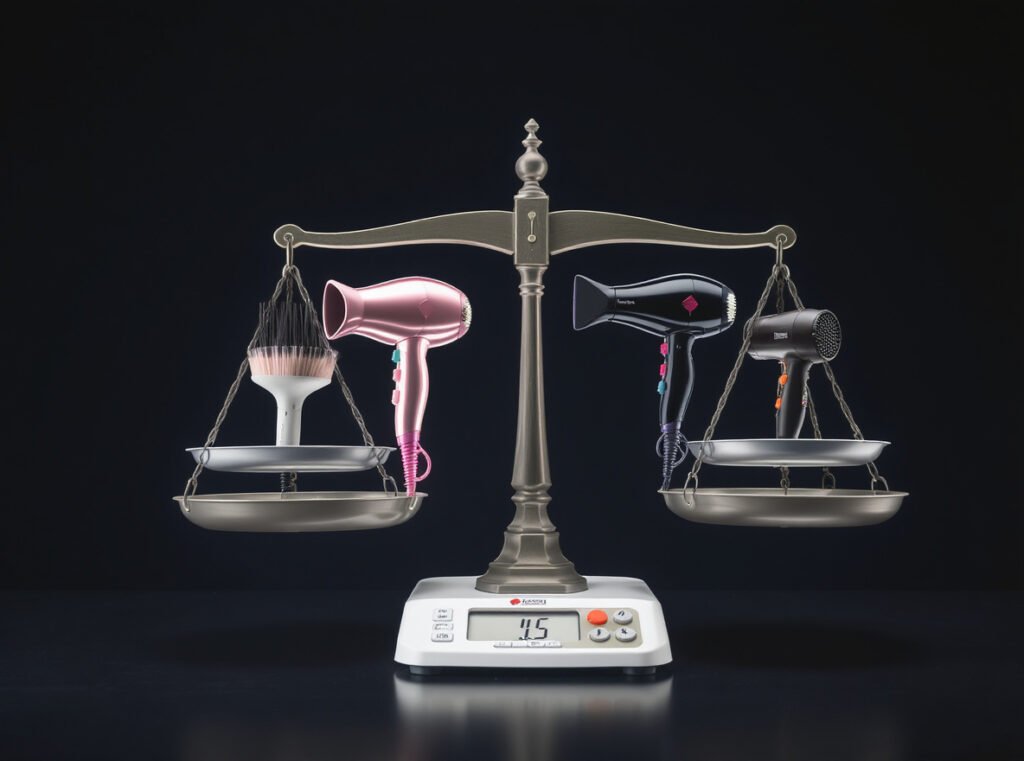
Weight considerations should align with intended user types and usage patterns. Professional stylists require tools that won’t cause fatigue during all-day use, while home users prioritize ease of handling for occasional styling.
Recommended weight ranges by user category:
- Professional stylists: 1.2-1.5 pounds maximum for all-day comfort
- Home users: 1-1.3 pounds for regular use without strain
- Travel applications: Under 1 pound preferred for portability
- Thick/long hair users: 1.3-1.9 pounds acceptable for increased power benefits
The upper limit of 1.9 pounds represents models like the Dyson Supersonic, which despite advanced technology is noted as “heavy compared to other hair dryers” yet delivers exceptional performance that justifies the weight for many users.
For wholesale distribution, offering products across these weight ranges ensures coverage of different market segments and user preferences.
What Features Add Weight but Improve Performance?
Several advanced features increase hair dryer weight while delivering substantial performance and user experience benefits.
Advanced motor technology, multiple control systems, ionic technology, professional-grade cords, and enhanced housing materials add weight but significantly improve drying efficiency, hair health, styling versatility, and product longevity.
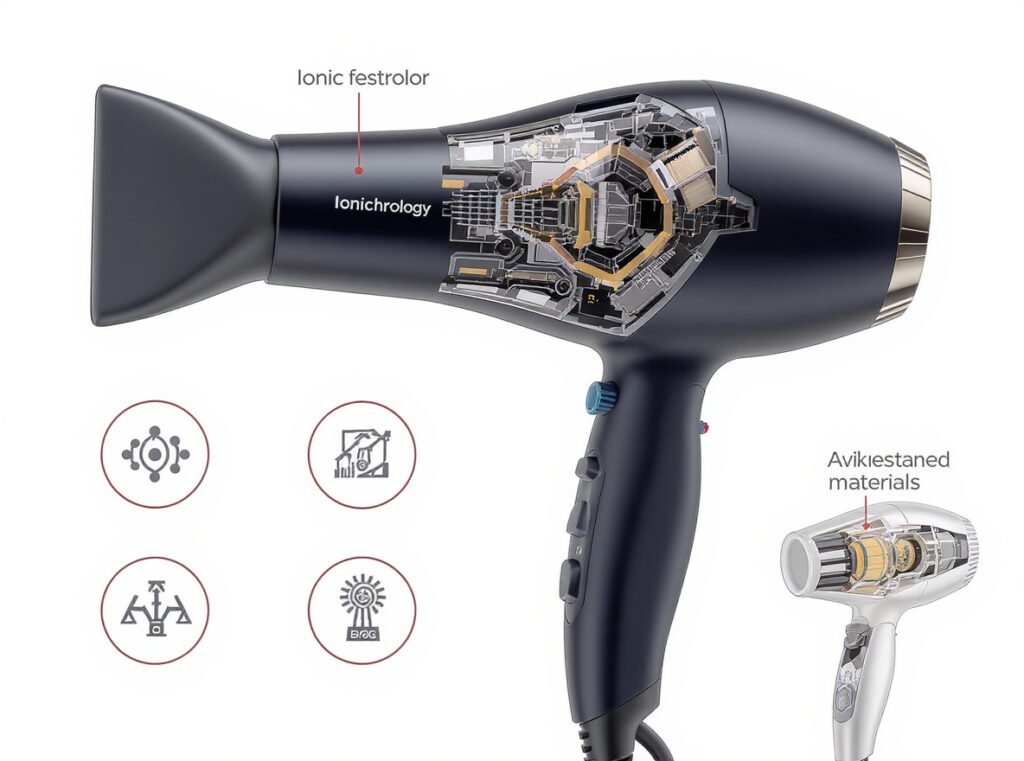
Understanding these weight-adding features helps wholesalers and retailers communicate value propositions effectively:
Advanced Motor Technology: Digital and brushless motors add weight but provide longer lifespans, quieter operation, and more precise control. The engineering complexity and robust construction required for high-performance motors justify the weight increase.
Enhanced Control Circuitry: Multiple heat and speed settings require sophisticated control systems and switches that add weight while enabling customization for different hair types and styling techniques.
Ionic Technology: Ion generators and related circuitry add weight while reducing frizz and improving hair smoothness. This feature particularly benefits users with damaged or chemically treated hair.
Professional-Grade Cords: Longer, more durable cords (9-10 feet) designed for salon use add significant weight but dramatically improve usability and workspace flexibility.
Heat-Resistant Housing Materials: Enhanced materials increase weight but improve safety, durability, and heat management, crucial for professional environments.
The Laifex P1C high-speed hair dryer exemplifies modern engineering that balances these performance-enhancing features with manageable weight. Our design incorporates advanced motor technology and user-focused features while maintaining optimal weight distribution for professional and consumer use. Explore specifications and wholesale opportunities at https://laifex.com/p1c-hair-dryer/.
Summary
Modern hair dryer engineering focuses on optimizing power-to-weight ratios rather than simply maximizing power. While heavier dryers traditionally offered more power, advanced motor technology now enables lightweight models to deliver professional results. The most effective approach balances sufficient wattage (1,600-2,000 watts) with manageable weight through efficient design and quality materials.
Ready to explore hair dryers that optimize performance and user comfort? Browse our professional-grade models designed for today’s demanding market requirements. Contact us for wholesale pricing and distribution opportunities that match your customers’ evolving needs.