When choosing hair dryers for your business, weight often determines user comfort and sales success. Heavy dryers cause arm fatigue, while lightweight models enhance customer satisfaction. The motor type directly controls this crucial factor.
Hair dryer weight directly correlates with motor type: AC motors average 24.59 ounces (1.54 lbs), DC motors average 13.82 ounces (0.86 lbs), while brushless motors are lightest at 12.27 ounces (0.77 lbs). Motor construction, electromagnetic components, and internal circuitry determine these significant weight variations.
Understanding this relationship helps you select the perfect hair dryers for your customer base and maximize your retail success.
What Are the Main Motor Types Used in Hair Dryers?
Modern hair dryers use three distinct motor technologies, each offering different weight profiles for various market segments.
Hair dryers use three primary motor technologies: AC motors (heaviest at 24.59 oz average), DC motors (moderate at 13.82 oz average), and brushless motors (lightest at 12.27 oz average). Each serves distinct market segments with different performance and weight priorities.
AC Motors: The Professional Powerhouse
AC motors deliver powerful airflow with extended operational lifespans up to 1,000-1,200 hours, making them the preferred choice for intensive salon use despite their heavier weight profile.
Professional stylists choose AC motors because they:
- Operate at slower RPMs (1,500-2,000) while maintaining powerful airflow
- Handle continuous daily usage in commercial environments
- Deliver consistent high torque output directly from AC power
- Provide exceptional durability for business operations
DC Motors: The Consumer Favorite
DC motors convert AC power through internal rectifiers, creating more compact designs with typical lifespans of 400-700 hours. This makes them ideal for personal use where lighter weight enhances user comfort.
Key DC motor advantages include:
- 44% lighter than AC motor equivalents
- More energy-efficient operation
- Compact internal circuitry design
- Cost-effective for consumer markets
Brushless Motors: The Technology Leader
Brushless motors eliminate physical brushes through electronic control systems, offering extended lifespans exceeding 2,000+ hours while maintaining the lightest weight profile available.
| Motor Type | Average Weight | Lifespan | Power-to-Weight Ratio |
|---|---|---|---|
| AC Motor | 24.59 oz (1.54 lbs) | 1,000-1,200 hours | 88.43 watts/oz |
| DC Motor | 13.82 oz (0.86 lbs) | 400-700 hours | 126.58 watts/oz |
| Brushless | 12.27 oz (0.77 lbs) | 2,000+ hours | 142.89 watts/oz |
Why Do AC Motors Make Hair Dryers Heavier?
AC motors require larger components and more robust construction, directly increasing overall dryer weight.
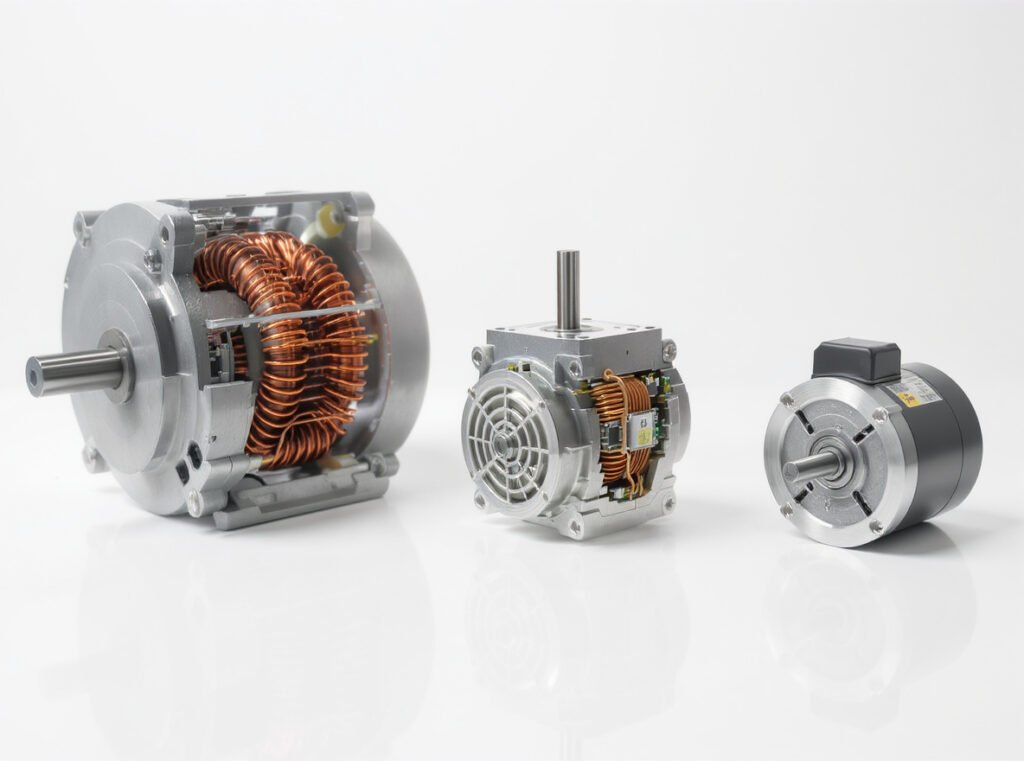
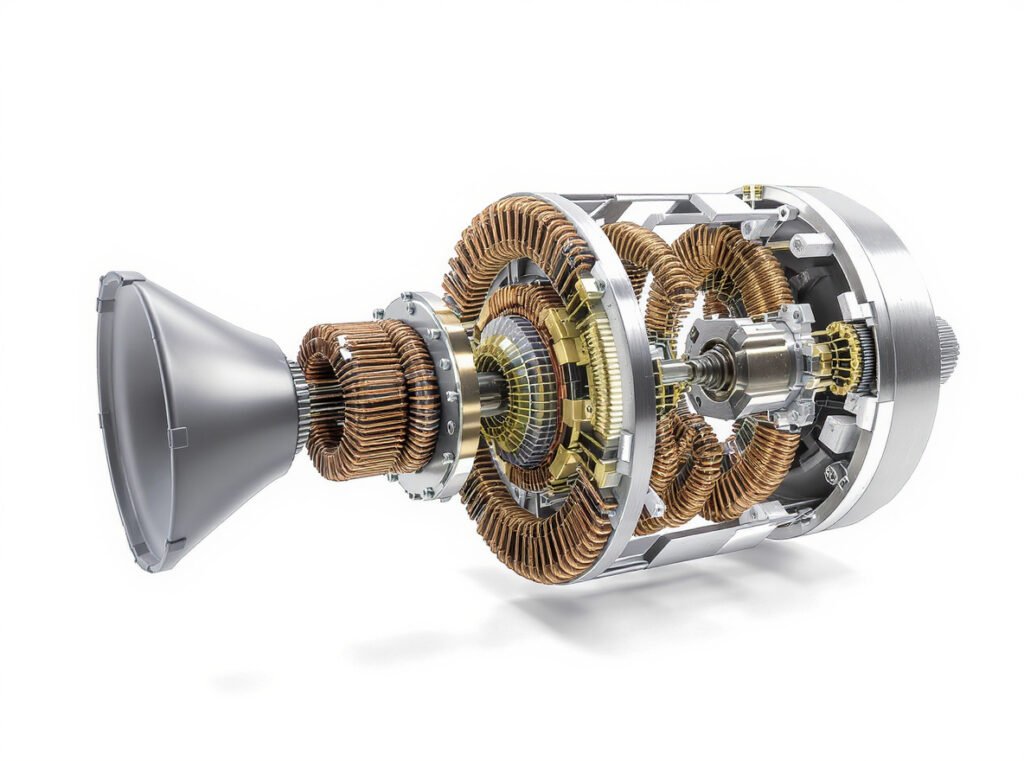
AC motors make dryers heavier due to larger electromagnetic components, substantial stator windings, and robust housing systems. Research shows AC motors average 24.59 ounces with weights ranging from 15.8 to 40.8 ounces, requiring more substantial construction for professional-grade performance.
Component Size Requirements
AC motors demand larger magnetic cores and heavier rotor assemblies to generate professional-level power at slower RPMs (1,500-2,000). The substantial electromagnetic components cannot be miniaturized without sacrificing the high torque output required for salon environments.
The weight contributors include:
- Larger stator windings and magnetic cores
- Heavier rotor assemblies for high torque
- Robust housing for heat dissipation
- Reinforced mounting systems for durability
Professional Performance Trade-offs
AC motors operate directly from wall outlet power, eliminating conversion losses but requiring more substantial internal frameworks. The average weight of 24.59 ounces reflects this engineering priority for sustained professional performance over portability.
For wholesale buyers, this translates to:
- Higher shipping costs due to substantial weight
- Premium market positioning for salon customers
- Strong demand from professionals prioritizing performance
- Longer operational lifespans (1,000-1,200 hours) justifying weight
How Much Lighter Are DC Motor Hair Dryers?
DC motors significantly reduce hair dryer weight while maintaining adequate power for most applications.
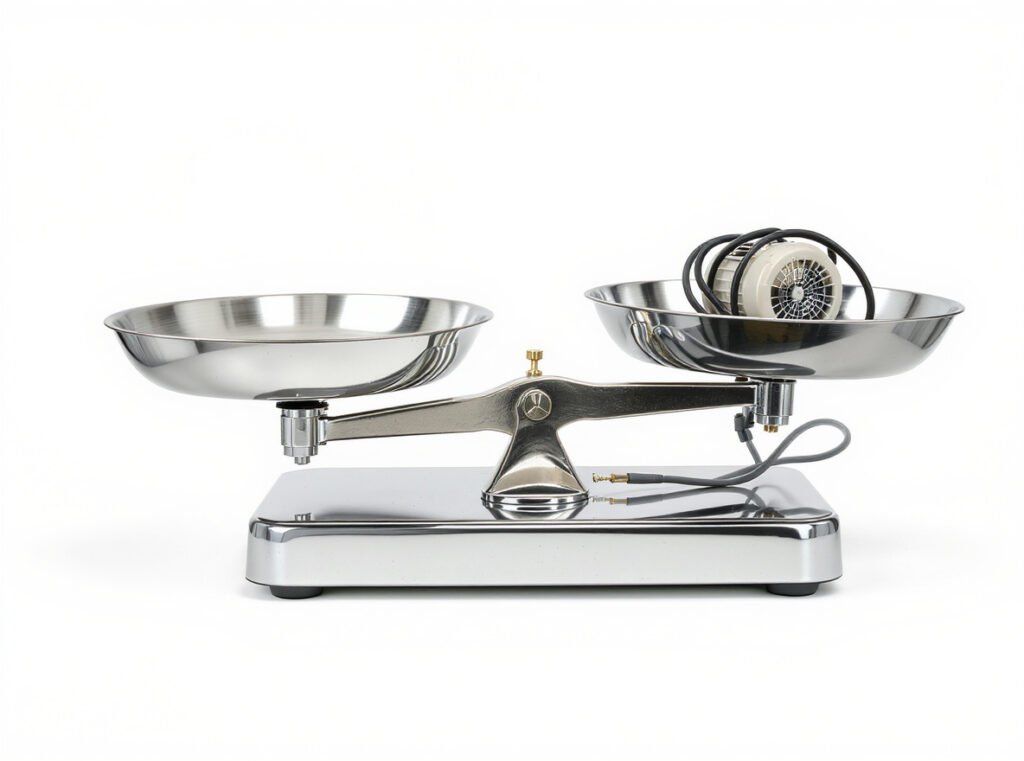
DC motor hair dryers average 13.82 ounces compared to AC motors at 24.59 ounces, representing a significant 10.77-ounce (44%) weight reduction. This dramatic difference comes from compact internal circuitry and smaller electromagnetic components.
Proven Market Examples
Popular DC motor models demonstrate this weight advantage: the Hot Tools Black Gold Ionic at 14 ounces, FHI Platform 1900 Nano Lite Pro at 13.4 ounces, and various Velecta Paris models ranging from 11.8 to 15.9 ounces.
The substantial weight savings create immediate benefits:
- Reduced arm fatigue during extended use
- Lower shipping costs for bulk wholesale orders
- Enhanced portability for travel market segments
- Improved user comfort driving customer satisfaction
Performance Balance Analysis
DC motors achieve this lighter weight while maintaining adequate power for most applications, with typical lifespans of 400-700 hours. The power-to-weight ratio of 126.58 watts per ounce represents good efficiency for consumer applications.
| Comparison Factor | AC Motor | DC Motor | Weight Advantage |
|---|---|---|---|
| Average Weight | 24.59 oz | 13.82 oz | 44% lighter |
| Power-to-Weight | 88.43 W/oz | 126.58 W/oz | 43% more efficient |
| Target Lifespan | 1,000-1,200 hrs | 400-700 hrs | Trade-off consideration |
Are Brushless Motors the Lightest Option?
Brushless motors represent the pinnacle of weight optimization in hair dryer technology.
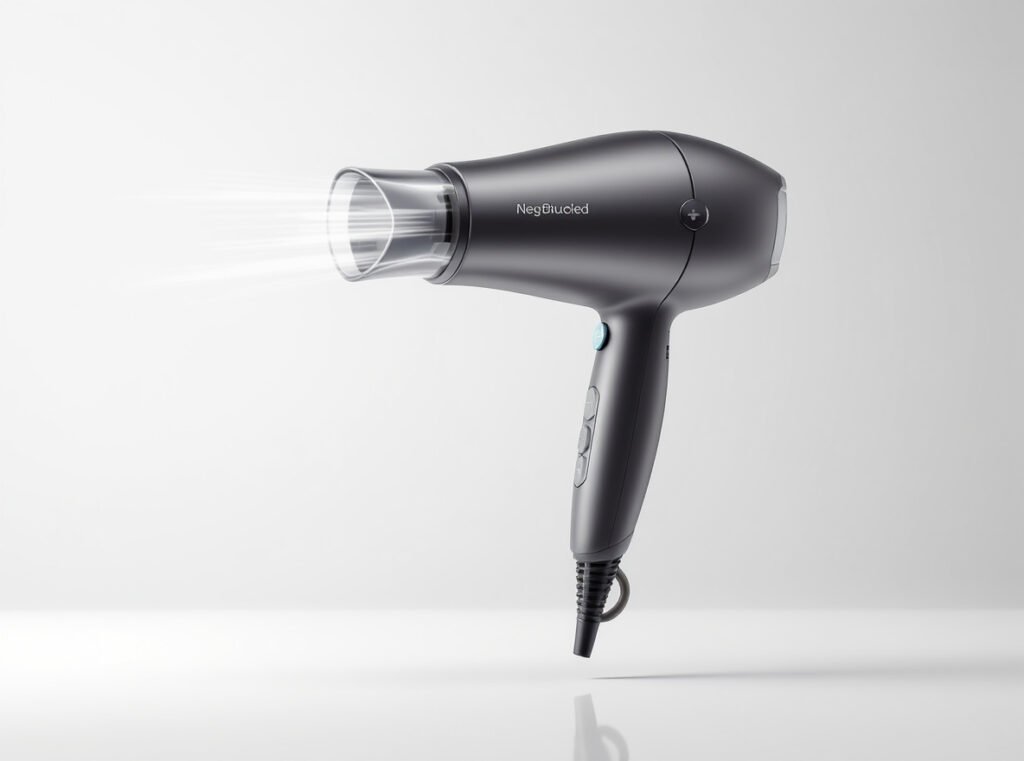
Brushless motors are the lightest option at 12.27 ounces average weight, making them 1.55 ounces lighter than DC motors and 12.32 ounces lighter than AC motors. They achieve the superior power-to-weight ratio of 142.89 watts per ounce through advanced electronic control systems.
Premium Model Examples
Leading brushless models showcase exceptional weight optimization: the Gamma+ Hybrid at just 10.6 ounces, Dyson Supersonic Professional at 11.2 ounces, and FHI Heat Accelerate 2200 at 15 ounces. These represent the pinnacle of lightweight professional performance.
This exceptional weight reduction transforms professional use:
- Minimal arm strain during extended styling sessions
- Enhanced maneuverability for complex styling techniques
- Reduced risk of work-related muscle strain injuries
- Premium market positioning with superior user experience
Technology Innovation
Brushless motors eliminate physical brushes through sophisticated electronic commutation, achieving extended lifespans exceeding 2,000+ hours while maintaining the lightest weight profile available in professional-grade dryers.
Advanced engineering features include:
- Electronic control systems replacing mechanical brushes
- Optimized motor housing with precision components
- Superior efficiency reducing heat generation
- Integrated smart controls for performance optimization
Market Leadership
Research confirms brushless motors deliver the best power-to-weight ratio at 142.89 watts per ounce, representing a 61% improvement over AC motors and 13% better than traditional DC motors. This technological advantage explains their rapid adoption in premium market segments.
What Other Factors Affect Hair Dryer Weight?
Beyond motor type, several additional components contribute to overall hair dryer weight.
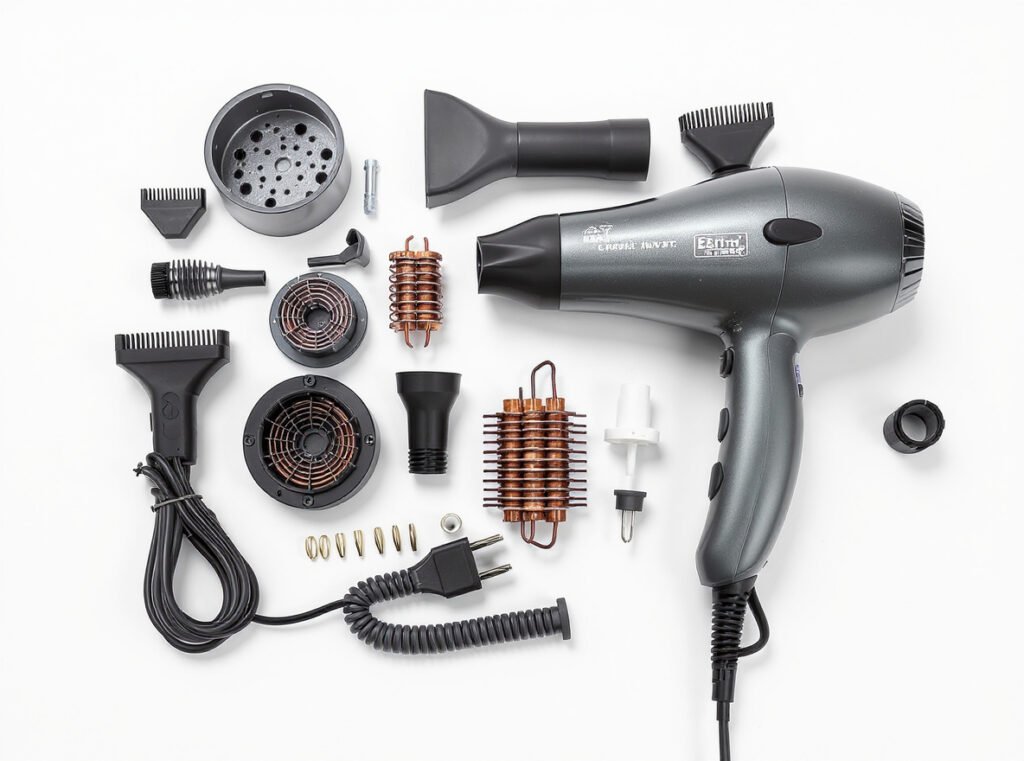
Beyond motor type, housing materials, heating elements, cord specifications, and advanced technologies significantly impact total weight. Professional models use heavier materials for durability, while consumer versions prioritize lighter construction for comfort.
Advanced Technology Integration
Modern hair dryers incorporate multiple technologies that affect weight profiles. Ceramic heating elements, infrared technology, and ionic generators require additional hardware components that increase overall mass while enhancing performance.
Technology weight factors include:
- Multi-layer ceramic heating systems
- Ionic generation components
- Advanced temperature control circuits
- Smart sensor integration systems
Construction Material Variations
Professional models utilize more durable plastics, metal reinforcements, and heat-resistant materials that add weight for extended commercial use. Consumer models balance lighter plastics with adequate durability for occasional home use.
Cord and Accessory Considerations
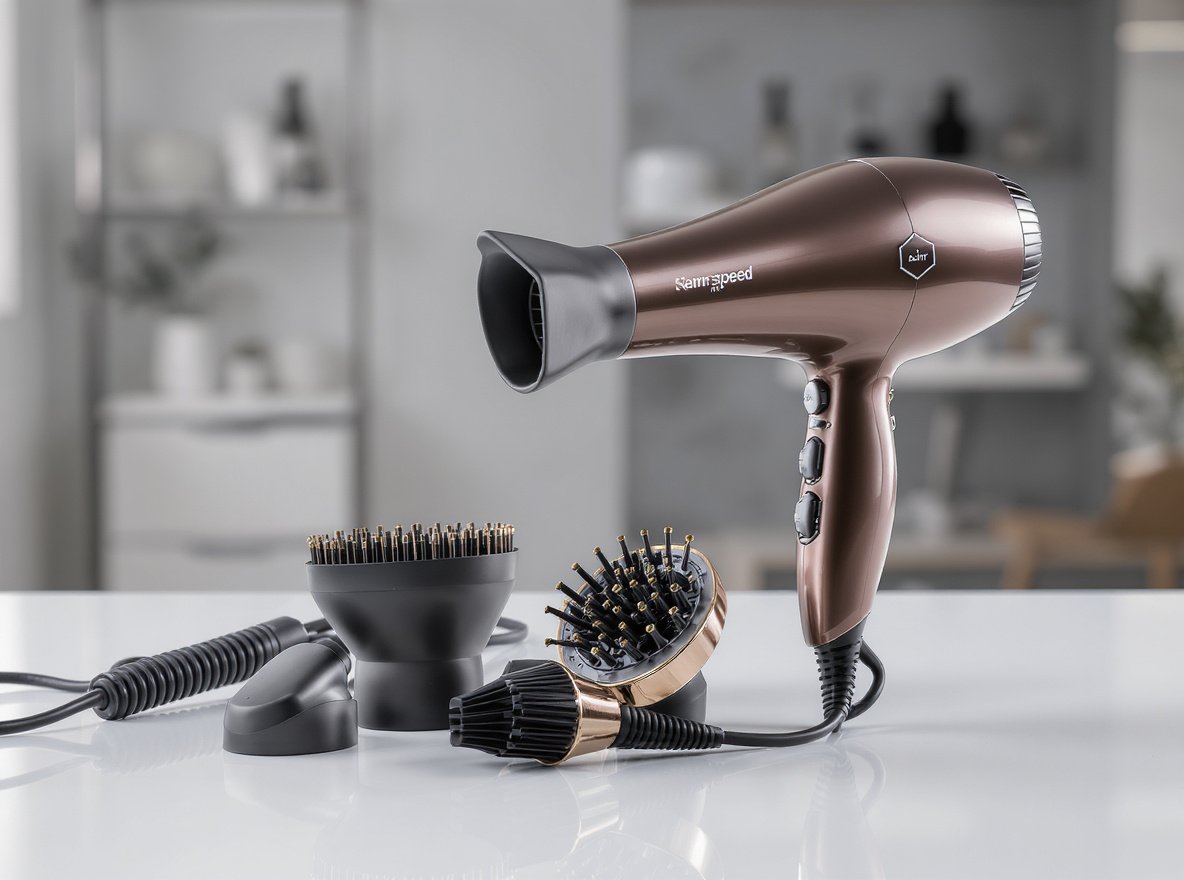
Professional hair dryers typically feature 9-12 foot cords weighing approximately 200 grams, while consumer models may use shorter, lighter cords. Attachments including concentrators and diffusers add to package weight but remain removable for daily operation.
| Component Category | Weight Impact | Professional vs Consumer |
|---|---|---|
| Advanced Heating | Moderate | Higher in professional models |
| Housing Materials | Significant | Heavier for durability |
| Cord Length | Minor | Longer/heavier for professionals |
| Technology Features | Variable | More features = more weight |
How Does Weight Affect Professional vs. Home Use?
Weight requirements differ significantly between professional salon environments and home users.
Professional salon use requires careful weight balance due to ergonomic challenges, with research showing 17.3% of hairdresser sick leaves result from muscle and bone pain. Dryers over 21.2 ounces (600g) create arm strain when held elevated for more than 4 minutes.

Professional Ergonomic Challenges
Salon professionals face significant ergonomic challenges with heavier dryers. Studies reveal that pistol-shaped dryers force stylists to extend elbows up to 60° from the body, creating trapezius muscle strain during extended use periods.
Critical ergonomic factors include:
- Maximum comfortable weight threshold of 21.2 ounces (600g)
- Elevated arm positioning creating neck and shoulder strain
- Time efficiency balance between weight and drying speed
- Long-term occupational health considerations
Home Use Flexibility
Home users enjoy more flexibility in weight tolerance since usage periods are typically shorter and less frequent. However, comfort still drives purchasing decisions, especially for users with longer hair requiring extended drying sessions.
Home user priorities:
- Occasional use allows heavier dryer tolerance
- Comfort during 10-15 minute styling sessions
- Travel portability for lightweight models under 1 pound
- Value balance between performance and ease of use
Professional Stocking Strategy
Understanding ergonomic requirements helps optimize inventory for professional accounts. Salons increasingly demand dryers under 21.2 ounces to protect stylist health, creating opportunities for brushless and lightweight DC motor models.
Recommended professional inventory:
- Brushless motors (12.27 oz avg): Premium salon segment
- Lightweight DC motors (13.82 oz avg): Cost-conscious salons
- Compact AC motors (under 20 oz): Traditional salon preferences
Which Motor Type Offers the Best Weight-to-Power Ratio?
The optimal weight-to-power ratio depends on specific use cases and customer priorities.
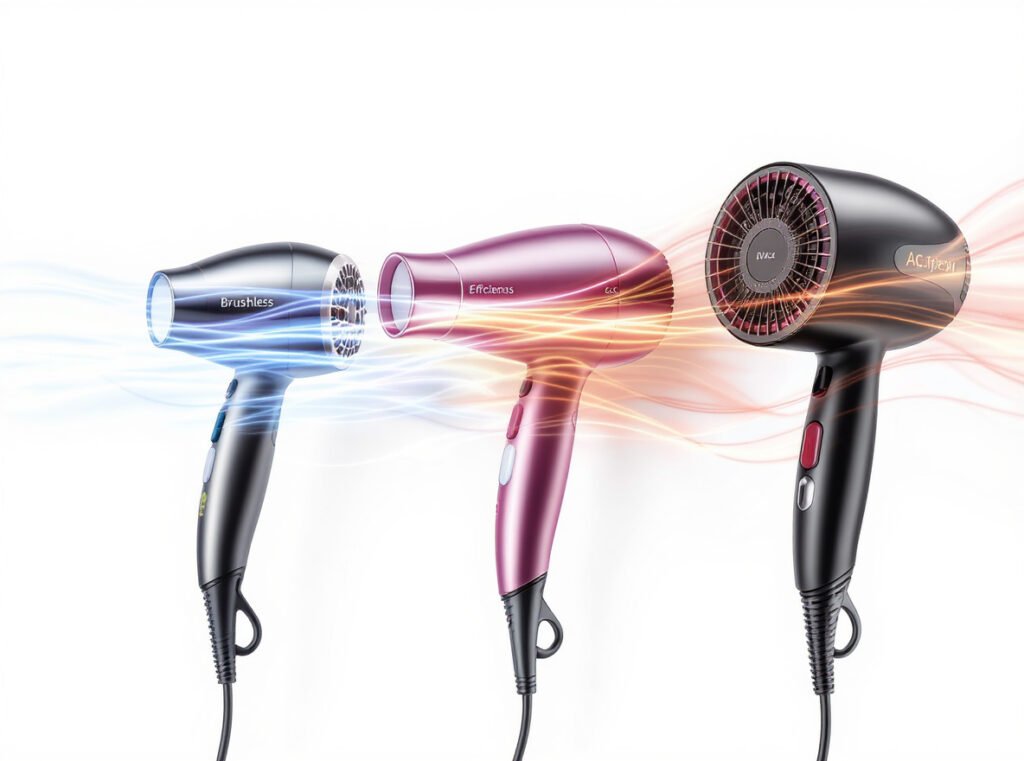
Brushless motors deliver the superior power-to-weight ratio at 142.89 watts per ounce, representing a 61% improvement over AC motors (88.43 W/oz) and 13% better than DC motors (126.58 W/oz). This makes brushless technology optimal for professional performance without arm fatigue.
Research-Backed Performance Analysis
Comprehensive market analysis reveals clear efficiency leaders across motor categories:
Brushless Motors: 142.89 watts/ounce – Superior efficiency with professional power
DC Motors: 126.58 watts/ounce – Good balance for consumer applications
AC Motors: 88.43 watts/ounce – Consistent with durability-focused design
Strategic Market Positioning
This performance data creates distinct value propositions for different customer segments:
Premium Professional Market: Brushless motors exclusively
- Maximum efficiency with minimal arm strain
- Advanced technology justifying premium pricing
- Superior user experience driving customer loyalty
Consumer Retail Market: DC motors for optimal value
- Good power-to-weight balance for home use
- Affordable pricing with adequate performance
- Comfortable weight for occasional styling
Traditional Professional Market: Lightweight AC motors
- Familiar technology with proven reliability
- Sustained power for busy salon environments
- Durability focus over weight optimization
For your wholesale business, consider the Laifex P1C high-speed hair dryer, which incorporates advanced motor technology optimized for the perfect weight-to-power balance. You can explore its specifications at https://laifex.com/p1c-hair-dryer/.
Summary
Hair dryer weight correlates directly with motor technology: AC motors average 24.59 ounces with maximum power for professionals, DC motors average 13.82 ounces offering 44% weight reduction, while brushless motors lead at 12.27 ounces with superior 142.89 watts/ounce efficiency. Understanding these specifications enables optimal inventory selection for different market segments.
Ready to explore hair dryers with optimal weight-to-power ratios for your business? Browse our complete range of professional-grade hair dryers and contact our wholesale team for customized solutions that match your market needs perfectly.