You’ve invested in beautiful hair extensions, but now you’re worried about damaging them during your daily styling routine. Unlike your natural hair, extensions don’t receive continuous nourishment from your scalp, making them vulnerable to heat damage that can quickly turn them dry, frizzy, and lifeless. The wrong hair dryer isn’t just inconvenient—it can shorten your extension lifespan from months to mere weeks.
The best hair dryer for hair extensions should have adjustable heat settings (maximum 350°F for human hair, 250°F for synthetic), ionic technology to reduce frizz and seal cuticles, ceramic heating elements for even heat distribution, at least 1,800-1,875 watts for efficient drying, a concentrator nozzle for precise airflow, multiple speed settings, a cool shot button, and lightweight ergonomic design under 1.5 pounds to prevent arm fatigue during longer drying sessions.
Let’s explore everything you need to know about choosing the perfect hair dryer that will keep your extensions healthy, shiny, and damage-free for months.
Why Does Choosing the Right Hair Dryer Matter for Hair Extensions?
If you’re wearing hair extensions, you already know they require more delicate care than your natural hair. But understanding why makes all the difference in how you approach drying them.
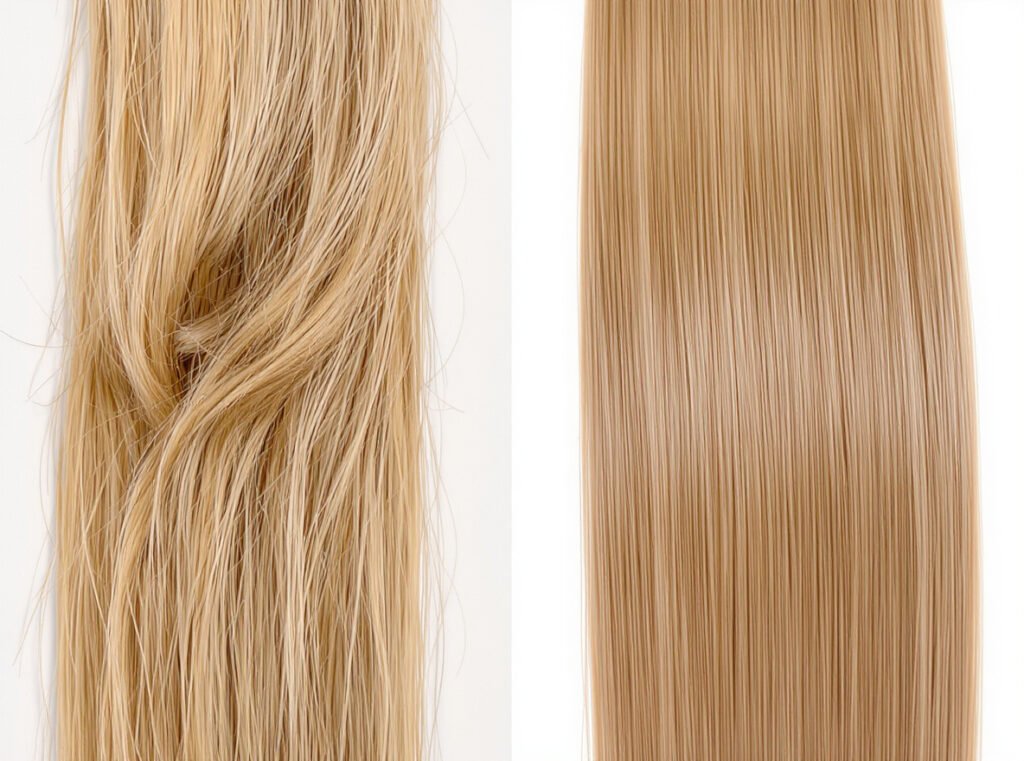
Hair extensions are vulnerable to heat damage because they lack natural oil production from your scalp and cannot regenerate like biological hair. Without this continuous nourishment and moisture, extensions quickly become dry, brittle, and tangled when exposed to excessive heat. The wrong dryer can cause irreversible damage including shortened lifespan, frizz, breakage, and weakened bonds that hold extensions in place.
Your natural hair benefits from sebum produced by your scalp, which acts as a protective barrier against heat. Extensions don’t have this advantage. Every time you apply heat, you’re working with hair that’s essentially isolated from any natural protection or repair mechanism.
This vulnerability manifests in several ways:
Accelerated Dryness: Without natural oils, extension fibers lose moisture rapidly under heat, leading to a straw-like texture that’s difficult to restore.
Bond Damage: For tape-in, keratin-bonded, or beaded extensions, excessive heat can compromise the adhesives or attachment points, causing premature slipping and shedding.
Tangling and Matting: Heat damage roughens the hair cuticle, causing strands to catch on each other and form difficult knots, especially near attachment points.
Reduced Longevity: Extensions subjected to improper heat styling can deteriorate from a 6-12 month lifespan down to just 2-3 months.
The right hair dryer with proper temperature control and protective features minimizes these risks while still delivering the styling results you want.
What Features Should You Look for in a Hair Dryer for Extensions?
Not all hair dryers are created equal, especially when it comes to protecting delicate extensions. Certain features become non-negotiable.
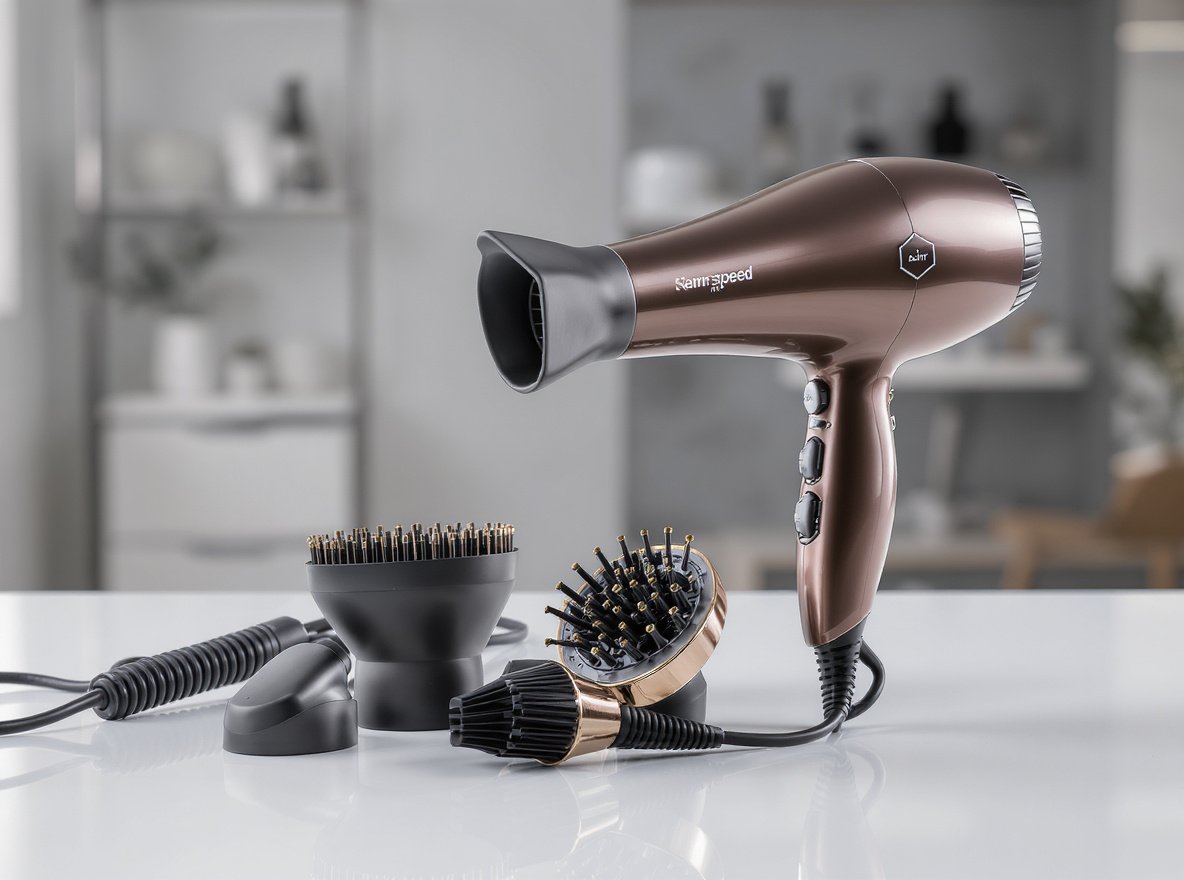
Essential features include multiple heat settings with at least three temperature options, multiple speed settings (minimum two speeds) for control over airflow intensity, ionic technology that emits negative ions to break down water molecules and seal cuticles, ceramic heating elements for even heat distribution, a cool shot button to set styles and lock in shine, a concentrator nozzle for precision styling, and adequate power (1,800-1,875 watts) for efficient drying that reduces total heat exposure time.
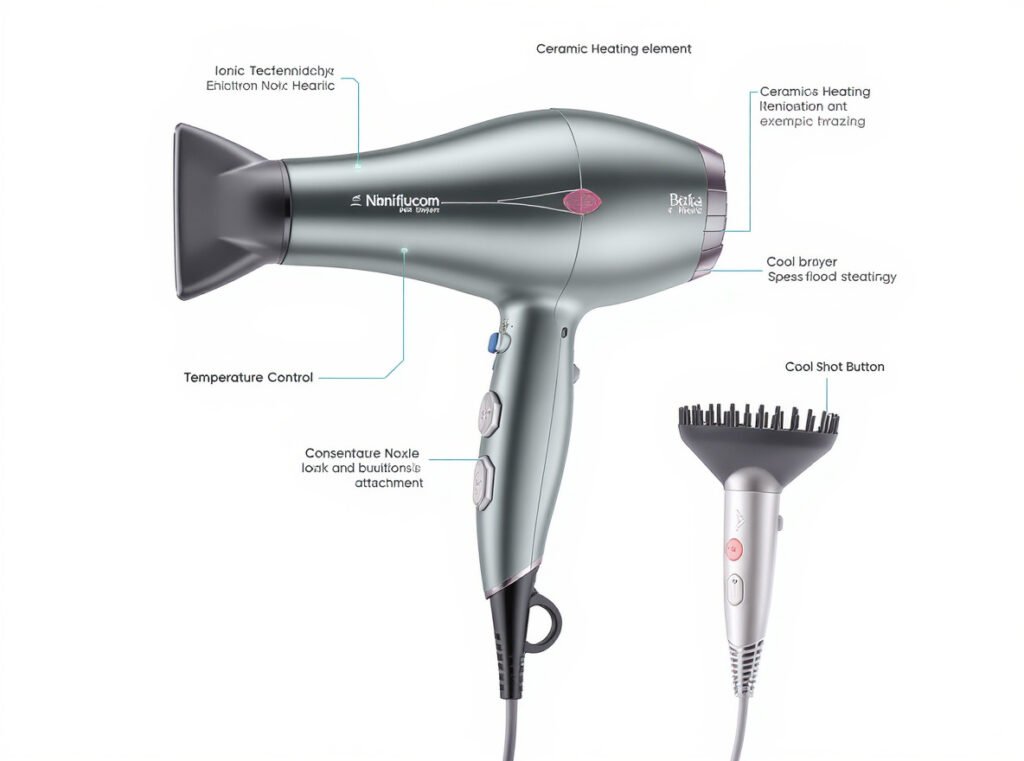
Let’s examine why each feature matters specifically for extensions:
| Feature | Why It’s Critical for Extensions | What to Look For |
|---|---|---|
| Multiple Heat Settings | Allows customization based on extension type and prevents overheating | Minimum 3 settings: low, medium, high |
| Variable Speed Settings | Provides control over airflow intensity without increasing heat | At least 2-3 speed options |
| Ionic Technology | Reduces frizz, seals cuticles, speeds drying to minimize heat exposure | Built-in negative ion generator |
| Ceramic Heating | Distributes heat evenly, prevents damaging hot spots | Ceramic or tourmaline ceramic coating |
| Cool Shot Button | Sets style and cools hair safely after heat styling | One-touch cool air function |
| Concentrator Nozzle | Directs airflow precisely without disturbing bonds | Narrow nozzle attachment included |
| Adequate Wattage | Faster drying reduces total time under heat | 1,800-1,875 watts professional grade |
Ionic technology deserves special emphasis for extension care. By releasing negative ions, these dryers break down water molecules more efficiently, allowing your hair to dry faster at lower temperatures. The result is reduced frizz, enhanced shine, and most importantly—less heat damage to your extensions’ delicate fibers.
Ceramic heating elements provide another layer of protection by distributing heat evenly across the heating surface. This prevents the dangerous hot spots that can occur in lower-quality dryers, where concentrated heat can literally melt adhesives or scorch hair fibers.
The cool shot button isn’t just a finishing touch—it’s a protective measure. After styling each section with warm air, sealing it with a burst of cool air closes the cuticle, locks in moisture, and sets your style without additional heat exposure.
How Much Power (Wattage) Do You Need?
Wattage isn’t just about raw power—it’s about efficiency that actually protects your extensions through reduced heat exposure time.
For hair extensions, choose a dryer with 1,800 to 1,875 watts. This power range is considered professional-quality and provides fast, efficient drying that reduces total heat exposure time by 30-40% compared to lower-wattage models. While higher wattage means more power, the key is combining adequate power with proper heat control—not simply choosing the highest wattage available.
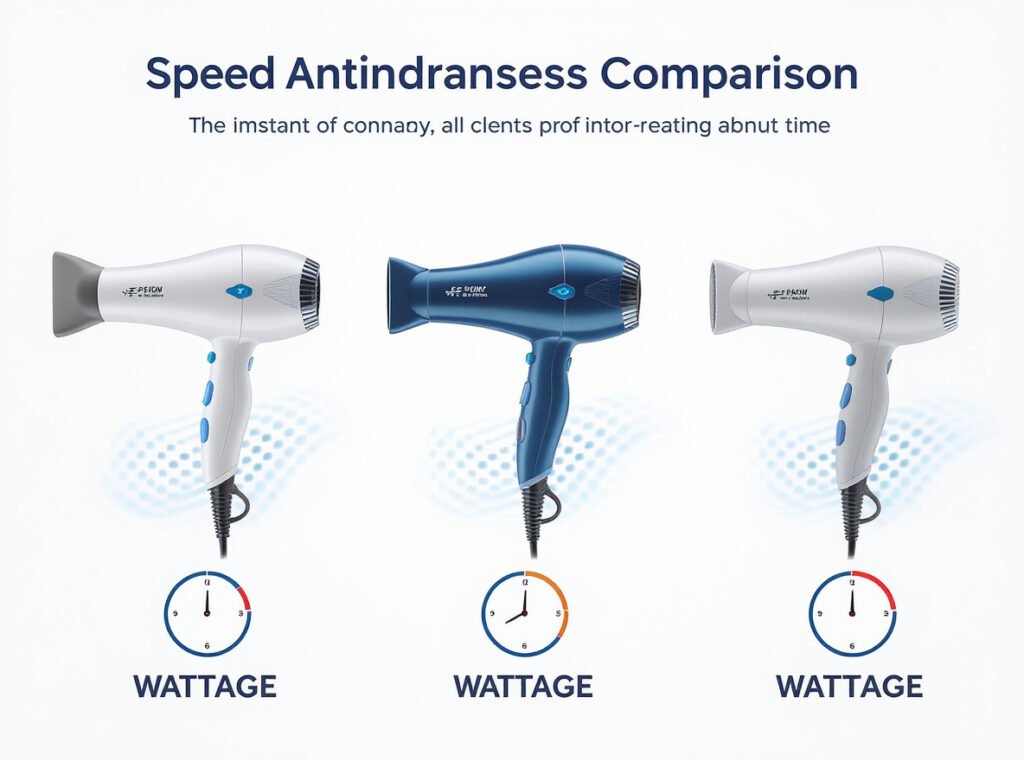
Here’s the protective logic: If a 1,200-watt dryer takes 20 minutes to dry your extensions but an 1,875-watt dryer accomplishes the same result in 12 minutes, you’ve reduced your heat exposure time by 40%. Over weeks and months of daily styling, this difference is significant.
However, higher wattage alone isn’t the complete answer. Your dryer must also have:
- Precise temperature controls to prevent overheating despite the higher power output
- Even heat distribution through ceramic or tourmaline technology to avoid concentrated hot spots
- Quality motor design that delivers consistent, reliable airflow without fluctuation
Professional-quality dryers in the 1,800-1,875 watt range typically use brushless motors that not only provide powerful airflow but also:
- Last significantly longer than traditional motors
- Run quieter for a more pleasant styling experience
- Maintain consistent power output over the dryer’s lifetime
- Generate less heat in the motor itself, keeping the handle cooler
For retailers and distributors considering product lines, this wattage range represents the sweet spot where performance meets safety for extension clients. It’s a key specification to highlight when marketing to salons and extension specialists.
Should You Choose Ionic or Ceramic Technology?
These aren’t just marketing buzzwords—they represent fundamentally different approaches to hair drying that significantly impact extension health.
For hair extensions, ceramic technology is generally preferred because it provides gentler, more even heat distribution that prevents damaging hot spots. Ionic technology is also highly beneficial as it breaks down water molecules faster, reduces drying time, minimizes frizz, and seals the hair cuticle for smoother results. The best hair dryers for extensions combine both technologies—ionic ceramic or tourmaline ceramic—delivering fast drying with safe, even heat distribution.
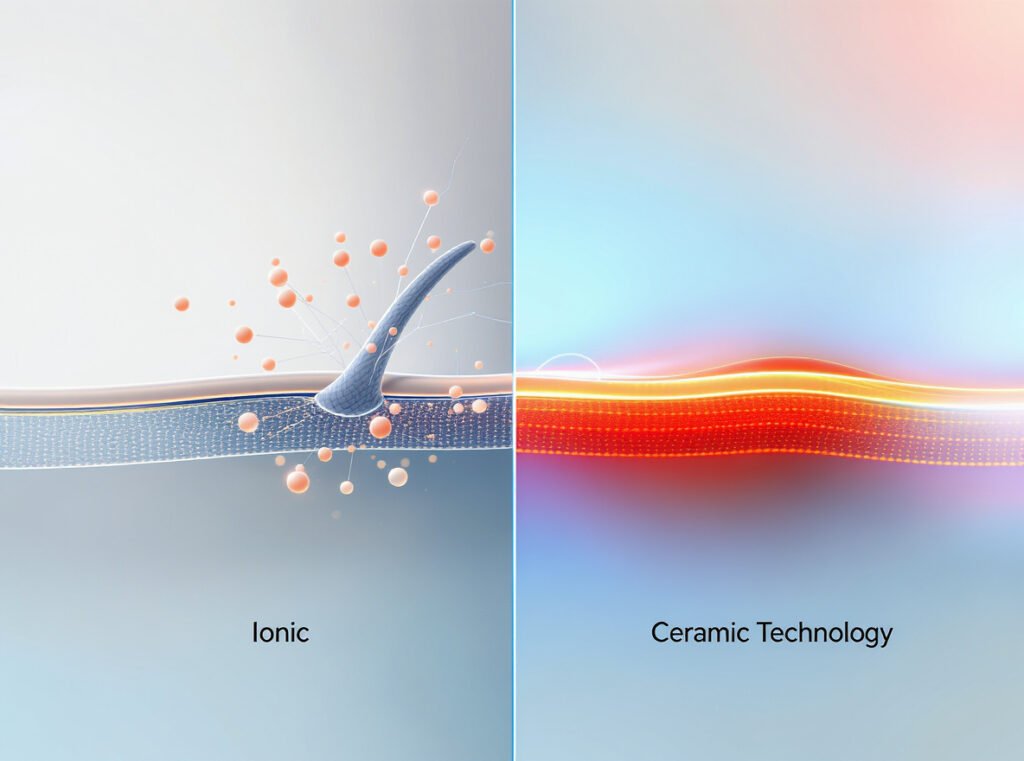
Understanding how these technologies work helps you make the right choice:
Ionic Technology Benefits:
- Releases millions of negative ions that neutralize positive ions in water
- Causes water molecules to break down and evaporate more quickly
- Smooths the hair cuticle by sealing it, which reduces frizz and static
- Enhances natural shine without heavy styling products
- Particularly effective for extensions that tend to tangle or develop static
Ceramic Technology Benefits:
- Uses ceramic heating elements that distribute heat uniformly
- Maintains consistent temperature without the fluctuating hot spots common in metal heating elements
- Emits gentle infrared heat that penetrates hair from the inside out
- Reduces surface damage to extension fibers
- Especially beneficial for fine or delicate hair types
Why Ceramic is Preferred for Extensions: The even heat distribution is crucial because extensions can’t recover from heat damage. Natural hair grows from the root and damaged ends can be trimmed, but extension damage is permanent until you replace them.
The Best of Both Worlds: Many premium professional dryers combine ionic and ceramic (or tourmaline ceramic) technologies. This combination gives you:
- Fastest possible drying time from ionic technology
- Safest heat distribution from ceramic elements
- Maximum frizz reduction and shine enhancement
- Optimal protection for your extension investment
When sourcing hair dryers for wholesale or retail, prioritize models advertising “ionic ceramic” or “tourmaline ceramic” technology. These dual-technology dryers command premium prices but deliver results that justify the investment for extension clients.
What Temperature Settings Are Safe for Hair Extensions?
Temperature control is absolutely critical—this is where most extension damage occurs. Different extension types have vastly different heat tolerances.
Safe temperature settings vary significantly by extension type. For Remy human hair extensions, never exceed 180°C (350°F). Non-Remy human hair should stay below 150-170°C (300-340°F). Heat-resistant synthetic extensions have a maximum limit of 120°C (250°F), while regular synthetic extensions should never be heat-styled. Always start with the lowest heat setting and increase gradually only if necessary, keeping temperatures between 120-150°C (250-300°F) for most extensions.
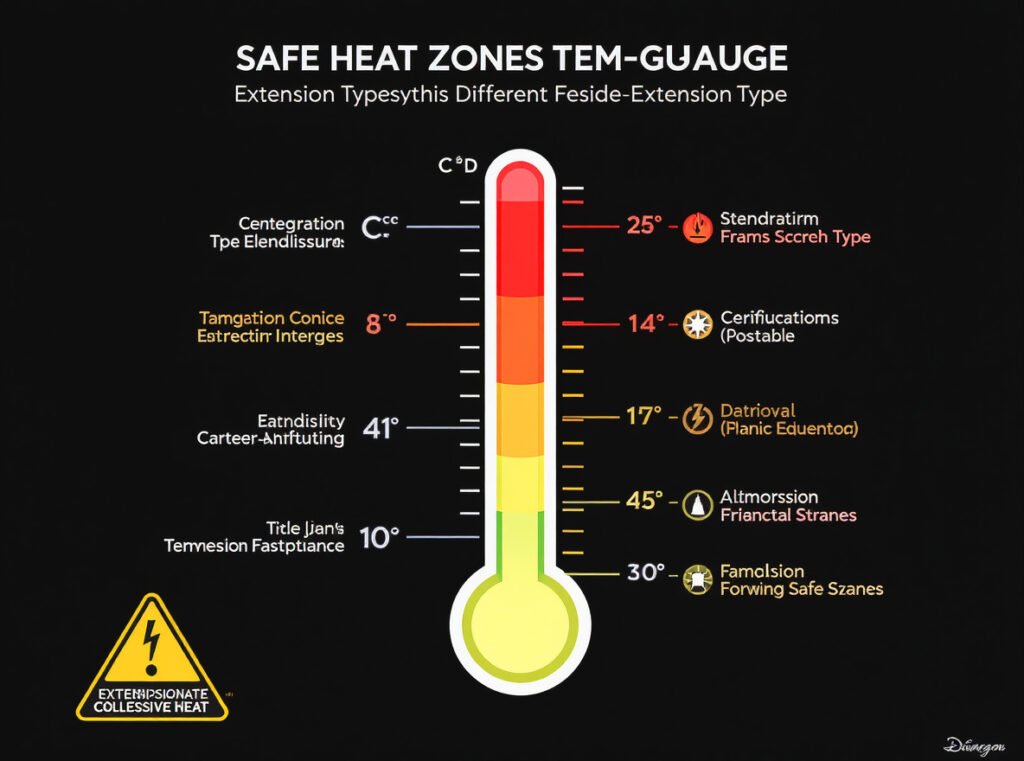
Here’s your quick reference guide for safe temperatures by extension type:
Human Hair Extensions:
- Remy human hair: Maximum 180°C (350°F), optimal range 150-170°C (300-340°F)
- Non-Remy human hair: Maximum 150-170°C (300-340°F), optimal range 120-150°C (250-300°F)
- Virgin human hair: Maximum 180°C (350°F), but performs best at moderate temperatures
Synthetic Extensions:
- Heat-resistant synthetic: Absolute maximum 120°C (250°F), no higher
- Regular synthetic: No heat styling whatsoever—cool air only
- High-quality heat-friendly synthetic: Some premium brands tolerate up to 140°C (285°F), but verify manufacturer specifications
Extension Types and Temperature Considerations:
- Tape-in extensions: Stay below 150°C (300°F) near the tape bonds to prevent adhesive melting
- Keratin-bonded extensions: Maximum 150°C (300°F) near bonds; higher temperatures can soften and compromise the keratin
- Beaded/sewn-in extensions: More heat-tolerant but still require moderate temperatures for hair fiber protection
- Clip-in extensions: Slightly more forgiving, but optimal care still requires temperature moderation
Professional Styling Approach: Experienced stylists recommend starting at the lowest setting and testing on a small, hidden section first. Gradually increase heat only if absolutely necessary to achieve your desired result. Remember: lower heat for longer is always safer than high heat for shorter time.
The 70-30 Rule: Dry your extensions to approximately 70% using low to medium heat settings, then finish the remaining 30% using cool air only. This technique dramatically reduces total heat exposure while still achieving fully dry hair.
How Important Is a Concentrator Nozzle?
This simple attachment might seem like an optional accessory, but it’s actually essential for proper extension care and styling.
A concentrator nozzle is crucial for hair extensions because it directs focused airflow precisely where needed, preventing scattered heat that could damage bonds or overheat sections. It allows you to dry hair in controlled sections without disturbing extension attachment points, reduces overall drying time through efficient airflow, helps achieve smooth, sleek blowout results, and prevents tangling caused by scattered, unfocused air hitting extensions from multiple angles.
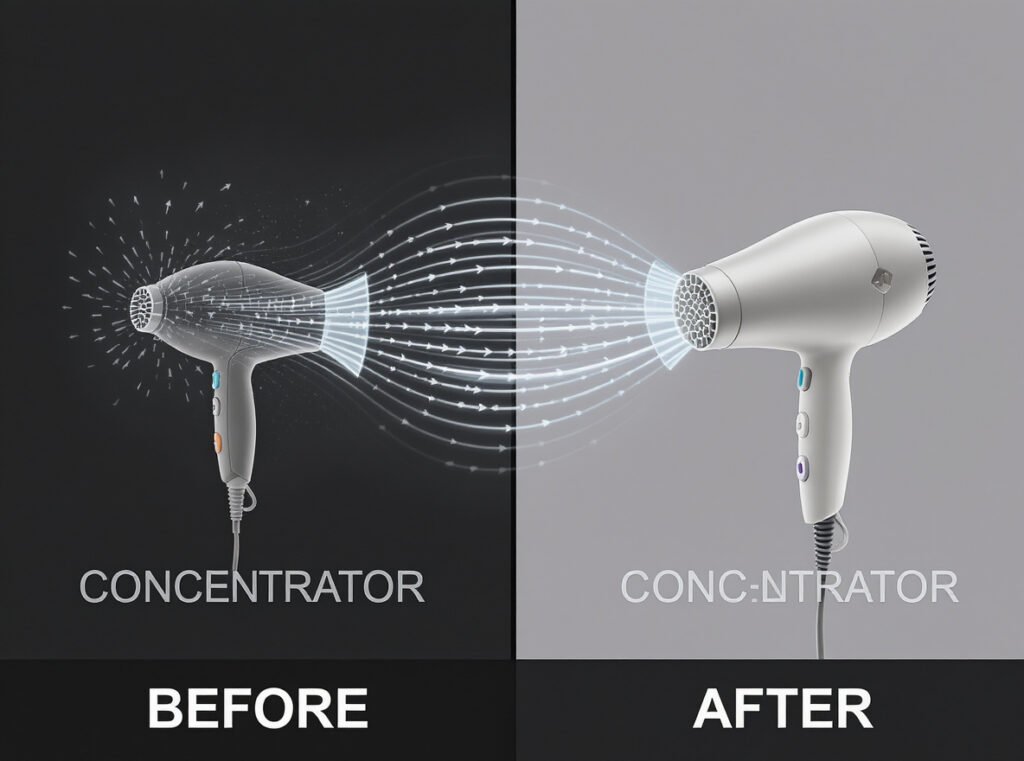
Without a concentrator nozzle, your dryer’s airflow spreads in all directions, creating several problems for extension wearers:
Bond Disruption: Scattered air can blow directly onto tape, bead, or keratin bonds from unexpected angles, potentially loosening attachments or causing uncomfortable pulling.
Uneven Drying: Some sections receive excessive heat while others remain damp, forcing you to go over your hair multiple times and increasing total heat exposure.
Increased Frizz: Unfocused airflow disrupts the hair cuticle direction, roughening the surface and creating frizz instead of smoothness.
Tangling Risk: Random airflow can cause extensions to blow into each other, creating tangles and knots, especially near attachment points where natural hair and extensions meet.
Longer Drying Time: Without concentrated airflow, heat and air dissipate less efficiently, requiring more time to dry each section thoroughly.
Proper Concentrator Nozzle Technique:
- Always attach the concentrator before beginning any heat styling
- Hold the dryer 6-8 inches away from your hair
- Point the nozzle downward, following the natural direction of hair growth
- Work systematically in small sections, moving from bottom layers to top
- Keep the dryer moving continuously—never hold it stationary on one spot
- Use a round or paddle brush in conjunction with the nozzle for professional results
This methodical, section-by-section approach with a concentrator nozzle protects your extensions while achieving salon-quality results at home.
Should You Invest in a High-Speed Hair Dryer?
High-speed hair dryers represent a newer category that’s gained significant popularity—but are they worth the investment for extension care?
High-speed hair dryers are an excellent investment for hair extensions because they reduce drying time by approximately 70% compared to traditional dryers, dramatically cutting total heat exposure. These dryers use advanced brushless motors to generate powerful, concentrated airflow as the primary drying mechanism rather than relying heavily on heat. Some innovative models like the RevAir use reverse-air technology that’s particularly gentle on extensions, braids, and protective styles, making them suitable for longer hair lengths (at least 3 inches).
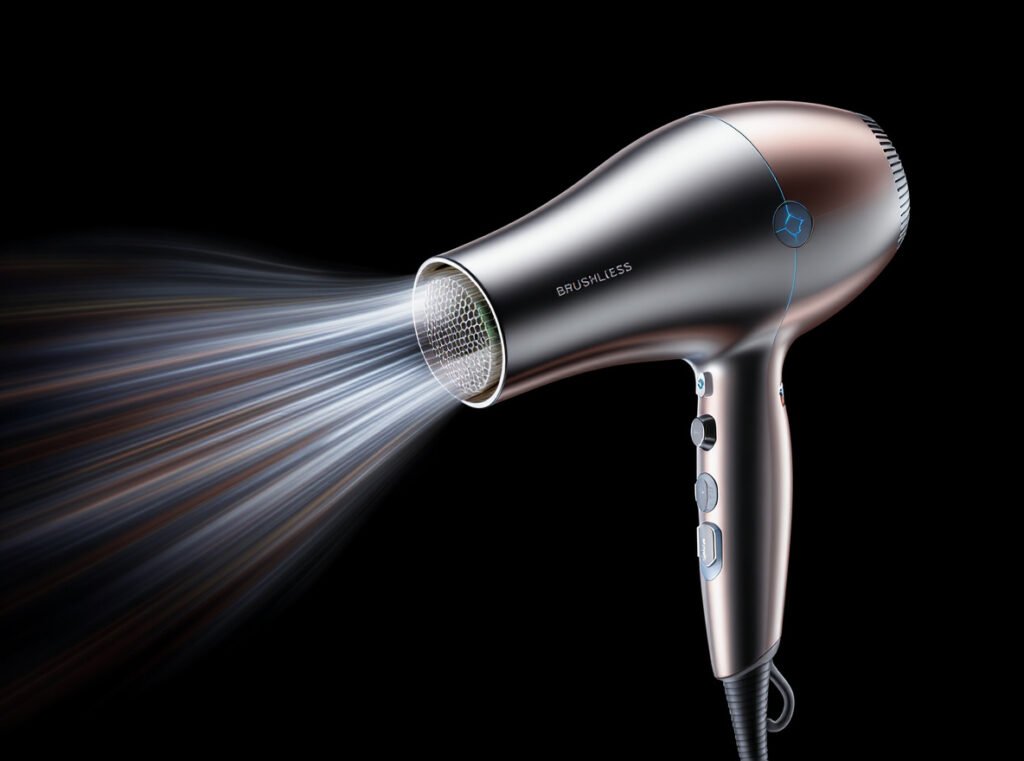
The fundamental difference between high-speed dryers and traditional models lies in their approach:
Traditional Dryers: Rely primarily on heat to evaporate water, with airflow as secondary support.
High-Speed Dryers: Use powerful airflow as the primary drying force, with heat as minimal secondary support.
This reversal of priorities makes high-speed dryers particularly beneficial for extensions:
Key Advantages for Extensions:
- Reduced Heat Damage: Less reliance on high temperatures means healthier extensions long-term
- Faster Results: 70% faster drying translates to significantly less time under any heat
- Better Control: Fast drying allows you to work section by section before hair cools and sets
- Professional Quality: Salon-level blowouts become achievable at home
- Energy Efficiency: Despite high power, efficient motors often use less electricity over time
Innovative Technologies: Some high-speed models use reverse-air technology that gently draws hair into the styling chamber rather than blowing hot air directly onto it. This approach is exceptionally gentle on extensions and particularly effective for:
- Hair extensions of any type
- Protective styles and braids
- Longer hair lengths (minimum 3 inches)
- Reducing mechanical stress on extension bonds
Investment Considerations:
- Higher initial cost (typically $300-600)
- May require learning new styling techniques
- Best suited for regular extension wearers who style frequently
- Long-term savings through reduced extension replacement and product longevity
For B2B buyers, high-speed dryers represent a premium category with strong growth potential. Customers investing in expensive hair extensions are typically willing to spend more on tools that protect their investment. The Laifex P1C high-speed hair dryer exemplifies this technology, combining powerful brushless motor performance with precise temperature control specifically engineered to protect both natural hair and extensions. Its professional-grade features make it an excellent choice for salons catering to extension clients and retailers serving educated consumers.
What About Weight and Ergonomics?
Comfort might not seem like a critical safety feature, but for extension care, ergonomics directly impact your styling effectiveness and consistency.
For hair extensions, choose a lightweight dryer weighing under 1.5 pounds (680 grams) with ergonomic handle design and balanced weight distribution. Extensions add significant hair volume and length, resulting in longer drying sessions (often 15-25 minutes) that can cause arm fatigue and poor technique. Ultra-lightweight professional models range from 249-380 grams (0.55-0.84 lbs), while standard lightweight models range from 400-500 grams (0.88-1.1 lbs). Maximum comfortable weight should stay under 2 pounds for regular use.
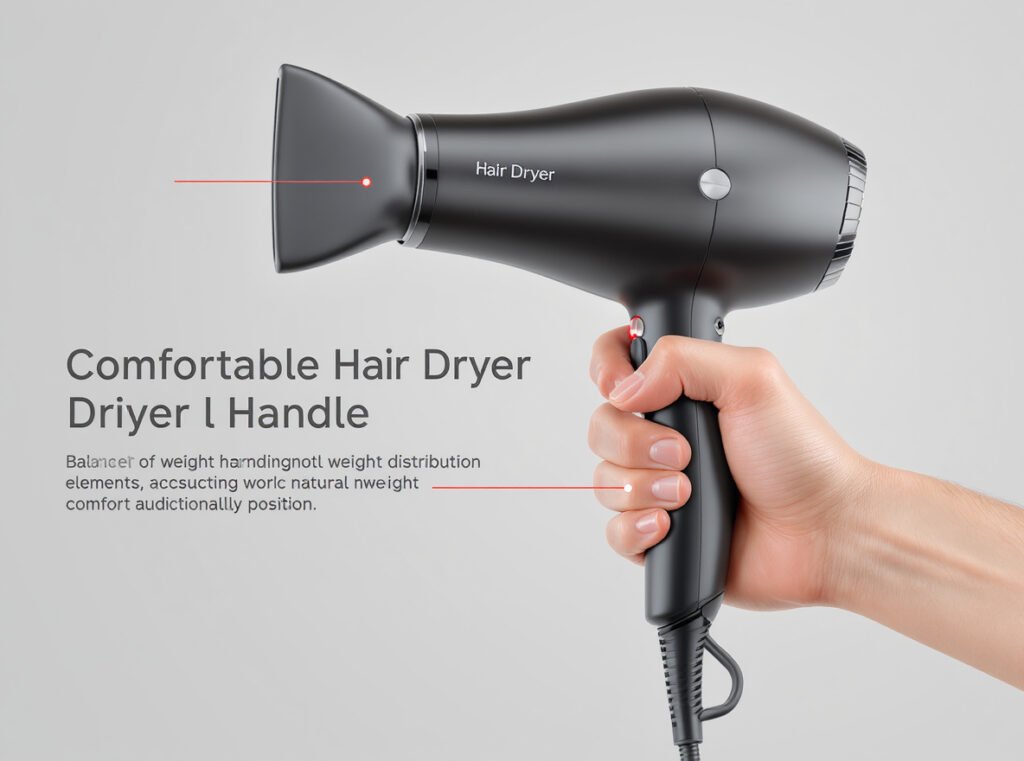
Why weight matters specifically for extensions:
Longer Drying Sessions: Extensions significantly increase your total hair volume. What might be a 10-minute drying session for natural hair becomes 20+ minutes with extensions. An uncomfortable, heavy dryer becomes increasingly difficult to maneuver properly as time passes.
Technique Degradation: As your arm tires, you naturally start taking shortcuts—holding the dryer closer, moving it less frequently, or using higher heat to finish faster. All of these compromises increase extension damage risk.
Attachment Point Stress: Fatigue makes it harder to support extension bonds properly while drying, potentially causing uncomfortable pulling or premature loosening.
Essential Ergonomic Features:
- Balanced weight distribution: Motor weight should balance with the handle to prevent wrist strain
- Comfortable grip: Non-slip handle materials that prevent hand fatigue during extended use
- Optimal handle length: Shorter handles (but not too short) provide better maneuverability
- Button placement: Controls should be easily accessible without requiring grip adjustment
- Cord specifications: At least 6-8 feet long with swivel connection to prevent tangling
Professional Considerations: Salon stylists particularly value lightweight designs because they use dryers constantly throughout the day, often on multiple clients with extensions. For wholesale and retail buyers targeting salon markets, emphasizing ergonomic specifications becomes a crucial differentiator.
Do You Need Multiple Speed Settings?
Speed control is often overlooked in favor of temperature settings, but both are equally important for extension care and styling versatility.
Multiple speed settings (at least 2-3 speeds) are important for hair extensions because they provide control over airflow intensity independent of temperature. Lower speeds work well for delicate final styling, setting styles with cool air, and working carefully near extension attachment points. Medium speeds offer versatility for general drying. Higher speeds efficiently remove initial moisture and work effectively when paired with lower heat settings. Variable speed combined with adjustable temperature gives you maximum customization for different extension types and styling needs.
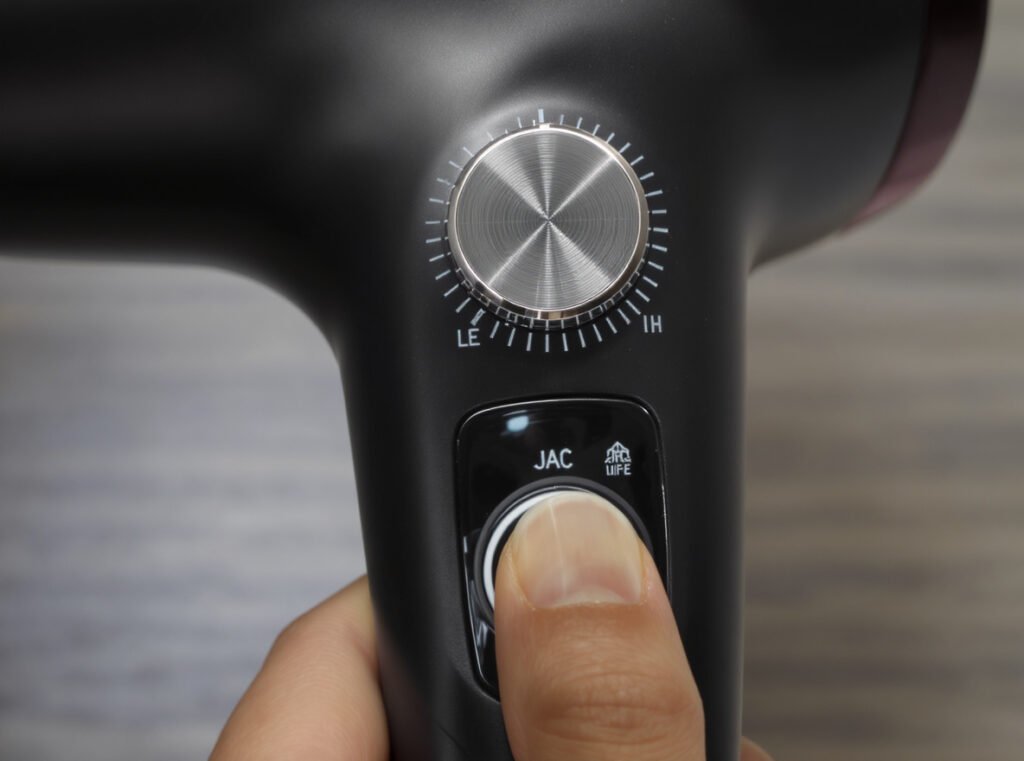
Practical applications for each speed setting:
Low Speed Applications:
- Final styling and smoothing for polished results
- Working near tape bonds, keratin attachments, or beaded rows where gentle airflow prevents disruption
- Using with cool air for setting and sealing styles
- Styling delicate face-framing layers and baby hairs
- Detailed work with a round brush for precision styling
Medium Speed Applications:
- General drying of mid-lengths and ends
- Most versatile for everyday styling routines
- Balanced approach between drying efficiency and control
- Ideal for maintenance touch-ups between full styling sessions
High Speed Applications:
- Initial moisture removal immediately after towel drying
- Rough-drying to approximately 70% before detailed styling begins
- Working with lower heat settings where increased airflow compensates for reduced temperature
- Drying thick sections or high-density extension installations efficiently
The Speed-Temperature Relationship: Understanding this relationship unlocks safe, effective extension drying:
- High speed + Low heat = Fast drying without dangerous temperatures (ideal for extensions)
- Medium speed + Medium heat = Balanced approach for general styling
- Low speed + Cool air = Perfect for finishing and setting styles
This combination flexibility essentially gives you unlimited customization options to match your specific extension type, hair thickness, desired style, and time available.
How Do You Dry Hair Extensions Properly?
Having the right equipment is only half the equation—proper technique is equally critical for extension longevity and appearance.
To dry hair extensions safely and effectively: Apply heat protectant spray evenly across all extensions before any heat styling, gently detangle using a wide-tooth comb or extension-specific brush starting from ends and working upward, section hair into manageable horizontal layers, use low to medium heat with moderate airflow, work systematically in small sections from bottom to top, keep the dryer 6-8 inches away and moving continuously, direct airflow downward following hair’s natural cuticle direction, avoid blowing directly on extension bonds or attachment points, and finish each section with cool air to set and seal the cuticle.
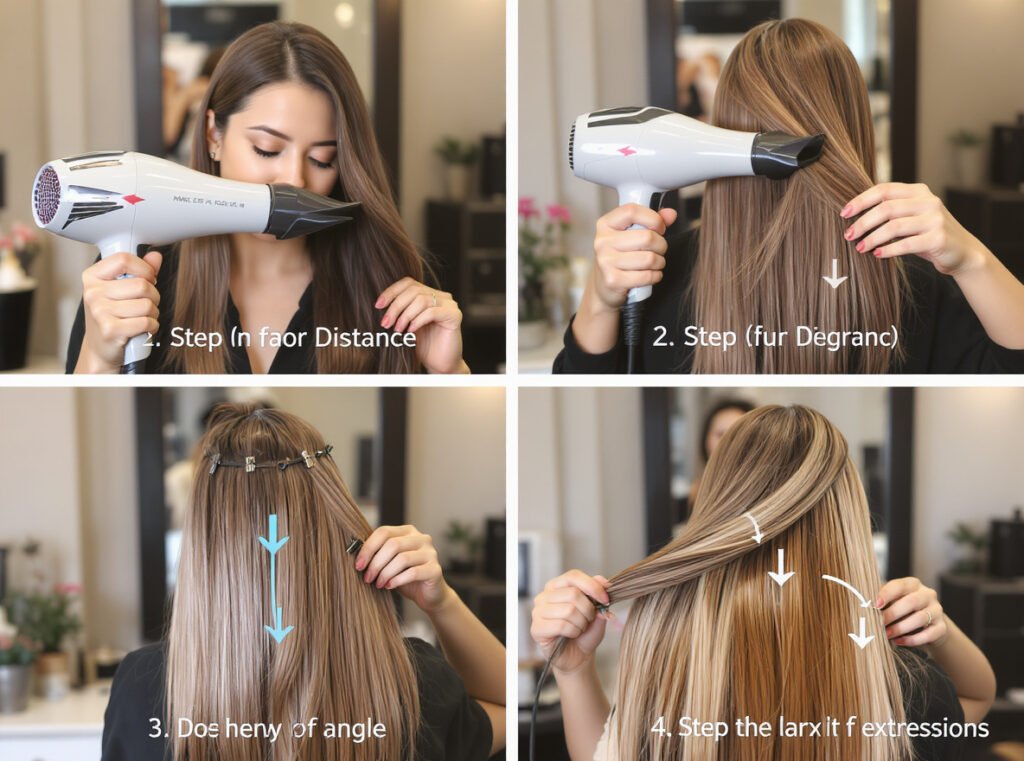
Step-by-step comprehensive drying process:
Pre-Drying Preparation (Critical Foundation):
- Gently towel dry: Pat and squeeze—never rub aggressively, which causes tangles and can stress bonds
- Apply heat protectant: Spray evenly throughout, concentrating on mid-lengths and ends where extensions are driest
- Detangle carefully: Start at the ends with a wide-tooth comb or specialized extension brush, working gradually upward to roots
- Section properly: Create 4-6 horizontal sections depending on hair thickness, using clips that won’t snag extensions
Active Drying Technique:
- Start with the bottom section first, leaving upper layers clipped away
- Use your concentrator nozzle attached and pointed downward
- Hold the dryer 6-8 inches away—never closer, which concentrates heat dangerously
- Keep the dryer moving continuously in smooth strokes along the hair length
- Work with a round or paddle brush for professional smoothness
- Support extension attachment points with your other hand to avoid stress
- Dry each section to approximately 70% using warm air, then finish with 30% cool air
Specialized Considerations by Extension Type:
| Extension Type | Special Technique Considerations |
|---|---|
| Tape-In | Avoid heat directly on tape bonds; dry hair around attachments carefully |
| Keratin-Bonded | Keep bonds cool and dry; never concentrate heat on bond points |
| Beaded/Sewn-In | Support beads or tracks while drying to prevent pulling |
| Clip-In | Can be removed and dried separately for easier management |
Advanced Professional Tips:
- Rough dry first: Remove about 70% of moisture using lower heat before detailed styling begins
- Point airflow downward always: This follows the hair’s natural cuticle direction, enhancing smoothness and shine
- Use the tension method: Gentle tension with your brush while drying creates sleeker results
- Cool shot between sections: Don’t wait until the end—seal each section as you complete it
- Check bonds thoroughly: Ensure all attachment points are completely dry before finishing, as moisture can cause slipping
Common Technique Mistakes to Avoid:
Never tip your head upside down while drying—this causes all your hair to press against extension bonds, creating tangles and matting at attachment points. Always keep your head upright and work in methodical sections.
What Mistakes Should You Avoid?
Even with perfect equipment, common errors can damage your extensions. Understanding these mistakes helps you avoid costly replacements.
Critical mistakes to avoid: Never use excessive heat above safe limits (350°F for human hair, 250°F for heat-resistant synthetic), don’t hold the dryer stationary on one spot, never blow directly onto extension bonds or attachments, always apply heat protectant products before styling, never attempt to blow-dry soaking wet extensions without towel drying first, don’t brush extensions while wet (when hair is most vulnerable), avoid aggressive handling or rough treatment, and never sleep with damp or wet extensions which causes matting and tangling.
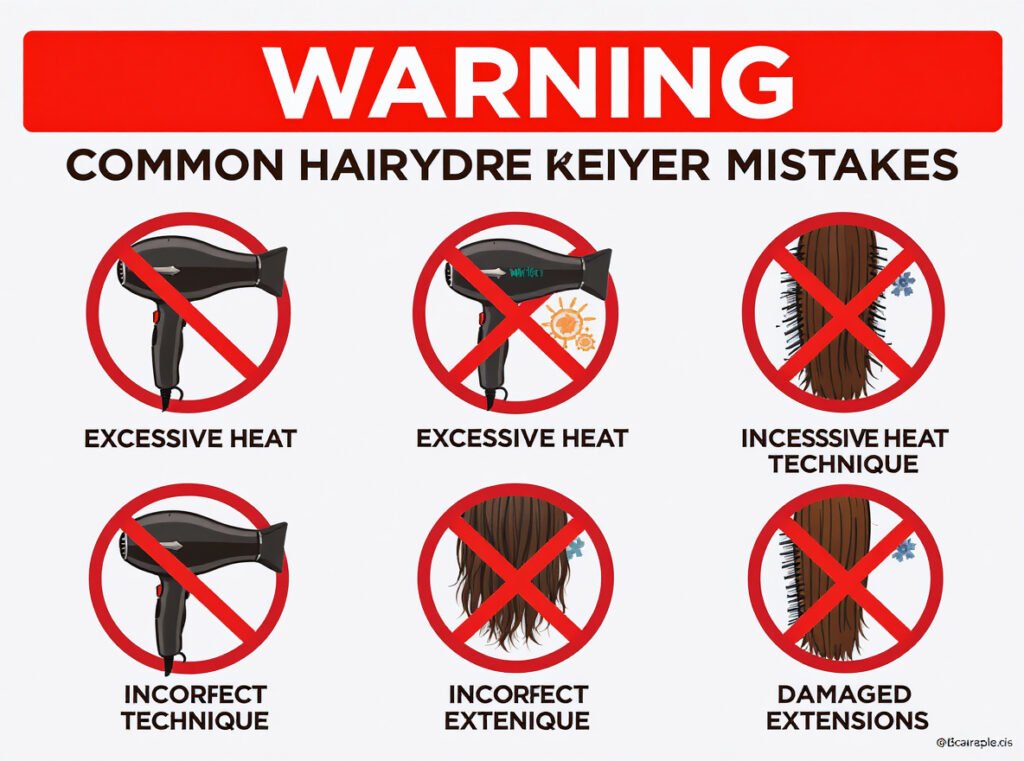
Heat-Related Errors:
- Excessive temperature: Using heat above safe limits causes irreversible fiber damage, cuticle destruction, and bond compromise
- Concentrated heat application: Holding the dryer still on one area creates dangerous hot spots that can literally melt adhesives or scorch hair
- Skipping heat protectant: This protective barrier is essential—think of it as insurance against heat damage
- Ignoring manufacturer limits: Each extension brand provides specific temperature guidelines for a reason
Technique Errors:
- Blow-drying soaking wet hair: Excessive moisture means prolonged heat exposure; always towel dry to at least 50% first
- Wet brushing: Wet hair is extremely fragile and vulnerable to breakage—detangle before wetting or after completely dry
- Aggressive handling: Extensions require gentler treatment than natural hair; rough handling causes shedding and tangling
- Improper sectioning: Working with sections that are too large prevents thorough, even drying
Post-Drying Errors:
- No cool-down period: Allowing extensions to cool completely before additional styling or manipulation prevents damage
- Improper storage: Leaving extensions loose or unprotected causes unnecessary tangling
- Sleeping with damp hair: Even slightly damp extensions can mat, tangle, and develop unpleasant odors overnight
- Insufficient drying at bonds: Moisture trapped at attachment points can cause slipping, loosening, or bacterial growth
Equipment and Product Errors:
- Using damaged dryers: Inconsistent or faulty heating elements create unpredictable hot spots
- Ignoring specific instructions: Different extension types (tape-in, keratin, beaded) have unique care requirements
- Over-washing: Excessive washing dries out extensions faster than styling heat—wash only as needed (typically 1-2 times per week)
- Wrong brush types: Avoid fine-tooth combs or hard-bristle brushes that can catch on bonds
The Cumulative Effect: Remember that extension damage is cumulative. One mistake probably won’t ruin your extensions, but repeated errors compound over time, progressively degrading quality until replacement becomes necessary months earlier than expected.
Summary
Choosing the best hair dryer for extensions requires balancing power, control, and protection features. Prioritize models with adjustable heat below 350°F, ionic and ceramic technology, 1,800-1,875 watts, concentrator nozzles, multiple speeds, cool shot functions, and lightweight designs. Master proper drying technique to maximize extension longevity and maintain salon-quality results at home.
Ready to protect your extension investment with professional-grade equipment designed specifically for safe, efficient drying? Explore the Laifex P1C high-speed hair dryer, engineered with advanced brushless motor technology and precise temperature control to protect both natural hair and extensions. Whether you’re a wholesaler expanding your product portfolio, a distributor seeking premium hair care tools, or a retailer wanting to offer customers the best protection for their extension investment, we invite you to browse our complete range and contact us for wholesale inquiries. Your customers’ extensions deserve professional-level care—partner with Laifex to provide it.